Best Toys & Gifts for 7-Year-Old Boys (2026)

Seven is the curious age. A seven-year-old can read the instructions, stick with a hard puzzle, code a simple path, and ask a hundred questions about how things work — but he isn't yet lost to screens and status. It's a brilliant age to shop for, and an easy one to get wrong: half the toys marketed here are licensed plastic that does the playing for the kid.

So we kept only toys we'd actually give a seven-year-old boy — every one from a maker with a real track record, with a genuine reason behind each pick. Heavy on the build-it, code-it, figure-it-out toys this age eats up.

🧸 Curating learning toys since 2004 Independent picks · no pay-for-placement

What seven-year-old boys are working on

Shopping well for this age gets easier once you picture what a seven-year-old is actually practicing. He can read and follow multi-step instructions now, so building sets and science kits with real directions finally pay off. His logic is sharpening fast — this is the age brain-teasers and first coding stick — and so is his patience, which is exactly the muscle a fossil dig or a tough Kanoodle puzzle quietly builds.

He's also forming genuine interests: dinosaurs, space, how machines work, building elaborate worlds. The best gift leans into whatever he's obsessed with this month and hands him something real to do with it — a robot to program, a circuit to wire, a rock to crack open. As a rule, the more a toy performs on its own, the less your child is actually doing. Pick the one that makes him the one figuring it out.

Build, code & engineer

Seven is when "build something" turns into "build something that works." These reward the leap — from coding a robot to wiring a circuit to engineering a marble run — and grow with him for years.

Artie 3000 The Coding Robot
Editor’s pick · Educational Insights

Artie 3000 The Coding Robot

Seven is the age coding finally clicks, and Artie is the gentlest on-ramp we've found: kids program a path on a tablet or laptop (or with simple drag-and-drop blocks), hit go, and watch a little robot draw the exact design they coded — in marker, on real paper. The instant feedback is the whole point: a wrong turn shows up as a wonky line, so a seven-year-old debugs their own logic without anyone lecturing them. It scales from trace-a-square on day one to spirographs and geometry weeks later, and it doesn't need Wi-Fi or an account.

Builds: coding logic · sequencing · cause & effect

~$39· See it on Amazon
Classic 100-Piece Magnetic Building Set
Best builder · MAGNA-TILES

Classic 100-Piece Magnetic Building Set

The rare toy a seven-year-old still reaches for years after most building sets get shelved. At this age the play turns ambitious — multi-level houses, marble-ramp contraptions, garages with working doors — and 100 tiles is finally enough pieces to pull it off without running out mid-build. The genuine magnets hold firm, which matters more, not less, as builds get taller and more elaborate. It's the open-ended anchor of a toy collection: no instructions, no wrong answer, and it pairs with the cars and dino expansion packs if he's into those.

Builds: spatial reasoning · geometry · engineering

~$96· See it on Amazon
City Stuntz Double Loop Stunt Arena
Best for LEGO fans · LEGO

City Stuntz Double Loop Stunt Arena

If your seven-year-old is deep in his LEGO phase, this is the set that earns its shelf space twice — first as a genuinely satisfying build, then as a toy he actually plays with afterward. The flywheel-powered stunt bikes launch through a ring of fire and a snapping snake loop, which is exactly the chaos a seven-year-old wants. It's a splurge, so save it for a birthday; for everyday LEGO, a 3-in-1 Creator set is the smaller, cheaper hit. Real LEGO holds its value and snaps onto everything he already owns.

Builds: build focus · fine motor · imaginative play

~$123· See it on Amazon
Circuit Maker Kit – 60 Projects
Best for budding engineers · National Geographic

Circuit Maker Kit – 60 Projects

The "how does electricity actually work" toy. Snap-together pieces let a kid wire up 60 real circuits — a working fan, a doorbell, a flashing light — with no soldering and no way to shock himself. Seven is right at the front edge for this: the simplest projects (light the bulb, spin the motor) land immediately, and the harder ones give him somewhere to grow. The aha moment of closing a circuit and having something actually turn on is the kind of win that turns a kid into a tinkerer.

Builds: electronics basics · following diagrams · problem solving

~$45· See it on Amazon

Think it through

The age persistence and logic really start to develop. A good brain-teaser teaches a seven-year-old to sit with a hard problem instead of bailing on it.

Kanoodle 3D Brain-Teaser Puzzle
Best under $15 · Educational Insights

Kanoodle 3D Brain-Teaser Puzzle

The pocket-sized puzzle that quietly builds the skill seven-year-olds need most: sticking with a problem. You flip to a challenge, drop in the starter pieces it shows, and figure out how the rest fit — 200 puzzles that climb from "oh, easy" to genuinely head-scratching. It's single-player and screen-free, which makes it the perfect restaurant, car-ride, and waiting-room toy, and the difficulty curve means it lasts for years instead of getting solved in a weekend.

Builds: logic · spatial reasoning · persistence

~$11· See it on Amazon
Design & Drill Marble Maze
Best hands-on STEM · Educational Insights

Design & Drill Marble Maze

Two great toys in one: a real kid-safe power drill, and a marble run he engineers himself. He drills colorful bolts into the board to build a maze, drops a marble, watches where it fails, then re-drills to fix the path — design, test, improve, which is engineering in miniature. The drill is the hook (seven-year-olds love a tool that actually works), and the build-and-redesign loop is what keeps it interesting long after the novelty wears off.

Builds: engineering · fine motor · planning

~$31· See it on Amazon

Little scientist, big mess

Seven-year-old boys are walking "why" machines. Hands-on science kits hand them the answer and the fun of finding it themselves — best done on a tray.

Mega Fossil Dig Kit – 15 Real Fossils
Best for dino fans · National Geographic

Mega Fossil Dig Kit – 15 Real Fossils

For the seven-year-old who can name more dinosaurs than you can, this delivers the real thing: genuine prehistoric fossils — shark teeth, fish, a dino bone — buried in a plaster block he chips out himself with the included tools. The digging is slow and a little messy, and that's the lesson: real paleontology takes patience, and the payoff feels earned. The learning guide tells him what each find actually is, so it's discovery, not just demolition. Do it on a tray or outside.

Builds: patience · fine motor · science curiosity

~$27· See it on Amazon
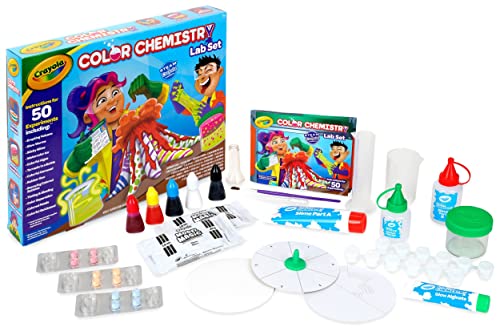
Color Chemistry Set – 50 Experiments
Best science kit · Crayola

Color Chemistry Set – 50 Experiments

A first chemistry set that hits the sweet spot for seven: 50 colorful, genuinely fun experiments — fizzing reactions, color-change "potions," ooze — using safe household-grade materials and clear step-by-step cards. It's from Crayola, so the emphasis is on the wow and the color, not memorizing the periodic table, which is exactly right at this age. A grown-up should sit in for the messier ones, and that shared-bench time is half the appeal.

Builds: observation · following steps · science curiosity

~$30· See it on Amazon
Kids Microscope, 400x with Slides
Best for explorers · National Geographic

Kids Microscope, 400x with Slides

The toy that makes the invisible world suddenly real. A pond-water drop, an onion skin, a bug's wing — under this kid-friendly microscope they turn into something a seven-year-old will drag the whole family over to see. It ships with prepared slides for instant wins plus blanks so he can hunt down his own specimens, which is where the real curiosity kicks in. Sturdier and easier to focus than the toy-store models, and a genuine spark for a kid who asks "why" about everything.

Builds: observation · fine motor · science curiosity

~$40· See it on Amazon
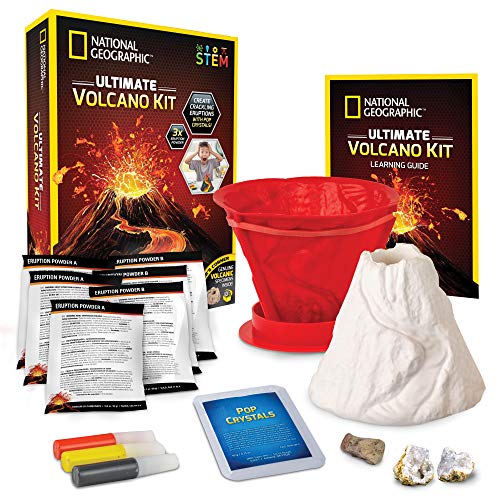
Ultimate Volcano Kit
Best classic experiment · National Geographic

Ultimate Volcano Kit

The erupting volcano is a rite of passage for a reason — and this kit does it bigger, with pop-crystals that add a crackle and enough material for repeat eruptions, so it's not a one-and-done. A seven-year-old can run most of it himself after the first go, which makes him feel like the scientist in charge. It's cheap, it's loud-ish and foamy, and the grin when it blows is the entire point. Set it on a tray; this one earns its mess.

Builds: following steps · observation · science curiosity

~$17· See it on Amazon

How much to spend

You really don't need to spend much. Several of the best toys here are under $30 — the Kanoodle puzzle, the Ultimate Volcano Kit, the Mega Fossil Dig Kit, and the Color Chemistry Set all punch above their price. The $30–45 sweet spot (Artie the coding robot, the Circuit Maker, the Marble Maze, a microscope) is where most generous birthday gifts land. The splurges worth it are a big MAGNA-TILES set or a LEGO Stuntz set — both last so many years the cost-per-play is tiny.

Frequently asked questions

What are the best toys for a 7-year-old boy?
Our top pick is the Educational Insights Artie 3000 coding robot — seven is exactly when coding clicks, and Artie turns it into something he can see drawn on paper. For a well-rounded gift collection, mix categories: a building anchor (MAGNA-TILES or LEGO), a brain-teaser (Kanoodle), a hands-on STEM toy (the Circuit Maker or Design & Drill Marble Maze), and a science kit (a dig kit, chemistry set, or microscope). Every toy in this guide comes from an established maker like Educational Insights, National Geographic, LEGO, or Crayola.
How much should I spend on a gift for a 7-year-old boy?
You can land a genuinely great gift for under $30. The Kanoodle puzzle (~$11), the Ultimate Volcano Kit (~$17), the Mega Fossil Dig Kit (~$27), and the Crayola Color Chemistry Set (~$30) all punch well above their price. A $30–45 toy like the Artie coding robot or the Circuit Maker kit makes a generous birthday gift. Save a $90+ MAGNA-TILES set or a big LEGO Stuntz set for a milestone — they last for years, so the cost-per-play is tiny.
What toys help a 7-year-old boy learn the most?
Toys that make him do the thinking, not toys that perform for him. Coding robots (Artie) build sequencing and logic; circuit and drill kits build real engineering intuition; brain-teasers (Kanoodle) build persistence; and science kits (dig kits, chemistry, a microscope) build the habit of observing and asking why. As a rule, the more a toy lights up and does the work on its own, the less your child is actually learning from it.
Are coding robots like Artie 3000 worth it at age seven?
Yes — seven is close to the ideal starting age. Artie works because the feedback is immediate and physical: a child programs a path, and the robot draws exactly what he told it to, so a logic error shows up as a crooked line he can see and fix himself. It scales from tracing a simple square to drawing spirographs and geometric patterns, and it runs offline with no account required. It is one of the few "tech" toys that teaches a real, transferable skill rather than just entertaining.
Should I buy different toys for a boy versus a girl?
Not really. Every toy on this list — coding robots, building sets, science kits, brain-teasers — is for any seven-year-old, and the skills they build matter for all kids. We have framed this guide around a seven-year-old boy because that is what people search for, but pick for your child’s actual interests, not the box art. A kid who loves dinosaurs wants the fossil dig kit whatever their gender.

How we choose — and a word on the links

Educational Toys Planet has specialized in learning toys since 2004. We pick independently, only from established makers, then cross-check every candidate against current availability and the major independent award and expert lists. We don't accept payment for placement.

Affiliate disclosure: the product links here are Amazon Associate links. If you buy through them we may earn a small commission at no extra cost to you — that's what keeps these guides free and updated. Prices change; tap through for Amazon's current figure. Last updated June 2026.

Related guides