

Best Science Toys & Kits for Kids (2026)

The best science toys do the one thing a worksheet can't: they hand a kid something real to wire up, mix, grow, or peer into — and let the curiosity arrive on its own. The trouble is the shelves are crowded with "STEM" kits that are really just a craft with a science word on the box, the experiment fizzling once and never working again.

So we kept only kits that earn the label — every one from a maker with a real track record, each chosen for a genuine, repeatable payoff a child can see and touch. Below, organised by the kind of science your kid is drawn to, and by age and budget.

🧸 Curating learning toys since 2004 Independent picks · no pay-for-placement

How to pick a science kit that actually gets used

The kits that stick share one trait: a fast, visible payoff. A circuit that lights up, a reaction that fizzes, a crystal that grows, an ant that tunnels — the child does a thing and the world does something back, immediately and obviously. Kits that bury the reward behind an hour of fiddly setup, or that work exactly once, are the ones that end up at the back of a closet. When you're choosing, ask: what's the moment my kid is doing this for, and how soon do they get to it?

Match it to the child, not the marketing. An observer wants a microscope or an ant farm; a builder wants circuits or a coding robot; an experimenter wants chemistry and reactions. And mind the age — a kit a couple of years too advanced becomes a parent's project, while one too simple gets outgrown in a weekend. The picks below are grouped exactly this way, so you can shop by temperament first and price second.

Build it & wire it

Real circuits and real coding, with an "it works!" payoff a kid can see and touch. These three turn abstract STEM into something that lights up, moves, or draws.

Snap Circuits 203 Electronics Exploration Kit
Editor’s pick · Snap Circuits

Snap Circuits 203 Electronics Exploration Kit

If you buy one science toy that actually teaches science, make it this one. The parts snap onto a plastic grid like big LEGO bricks, so a kid wires up a working alarm, a fan that launches a propeller, or a doorbell without stripping a single wire or touching a soldering iron. The colour project manual walks through 200+ builds in order, each one a real, observable circuit — flip the switch and something happens. It's the rare kit where "follow the diagram" turns into "I wonder what this does," and the pieces survive years of being dumped in a bin. Eights and up get it on their own; younger kids do it happily alongside a grown-up.

Builds: circuit logic · cause & effect · following diagrams

~$38· See it on Amazon
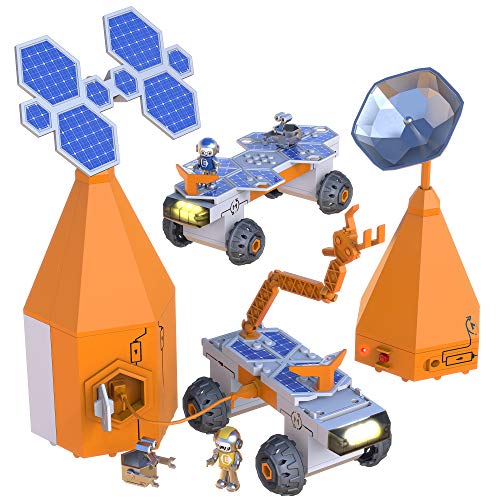
Circuit Explorer Rover
Best for space fans · Educational Insights

Circuit Explorer Rover

Circuits for the kid who isn't sure they like circuits yet. You build a space rover and wire up its lights — close the circuit correctly and they actually glow, which is an immediate, satisfying "it works" that hooks a six-year-old fast. It's a gentler on-ramp than a full electronics kit: fewer parts, a space-mission theme to pull them in, and enough open-ended building that the rover becomes a toy after the lesson lands. A great bridge from building toys into real STEM.

Builds: circuit basics · building · problem solving

~$26· See it on Amazon
Artie 3000 The Coding Robot
Best for coding · Educational Insights

Artie 3000 The Coding Robot

Coding you can watch draw itself across the page. Artie holds a marker, and kids program it from a tablet or computer to roll out shapes and patterns — block-based for beginners, real text languages like Python and JavaScript for kids ready to push further. The genius is that every command produces a visible line, so a coding mistake isn't an error message, it's a wonky drawing they can see and fix. It needs a screen to drive it, but the result is on paper, in the real world — a rare coding toy that grows with a child for years.

Builds: coding logic · sequencing · computational thinking

~$39· See it on Amazon

Mix it & grow it

Hands-on chemistry and earth science — fizzing reactions, growing crystals, an erupting volcano. The kind of experiments kids beg to run a second time.

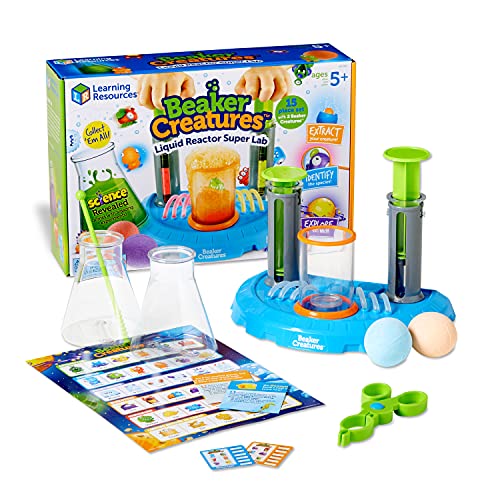
Beaker Creatures Liquid Reactor Super Lab
Best first chemistry · Learning Resources

Beaker Creatures Liquid Reactor Super Lab

Fizzing-reaction chemistry with a payoff a young kid actually cares about. You drop a pod in water, it bubbles and dissolves, and a little collectible "creature" is revealed inside — so the reaction isn't an abstract colour change, it's a reveal they beg to do again. Along the way they're using a real pipette, a beaker, and a test tube, building the lab habits and hand control that real science needs later. It leans toy more than textbook, but for ages five to eight it's the kit that makes "doing an experiment" feel like the best part of the day. Refill pods are sold separately, which is the one catch.

Builds: observation · reactions · fine motor

~$27· See it on Amazon
Crystal Growing Science Kit
Best under $15 · 4M

Crystal Growing Science Kit

The cheapest way to grow a genuine "I made that" moment on a windowsill. You mix the solution, set up the seed, and over several days watch real crystals form into colourful clusters a child can keep. It's a clean, classic introduction to how solutions and crystallisation work, with a tangible keepsake at the end instead of a worksheet. It does involve hot water and a few days of waiting, so it's a do-together project for the eight-to-ten crowd rather than a hand-it-over toy.

Builds: chemistry · observation · patience

~$13· See it on Amazon
KidzLabs Volcano Making Kit
Best classic experiment · 4M

KidzLabs Volcano Making Kit

The erupting-volcano experiment, done properly. The kit has you mould and paint your own volcano first — a craft project in itself — and then set off the classic baking-soda eruption again and again. It's messy in the way kids adore and parents tolerate, and underneath the foam it actually carries some real earth-science vocabulary about how volcanoes form. A reliable rainy-afternoon win that punches well above its price.

Builds: earth science · following steps · chemistry

~$14· See it on Amazon

Look closer

Microscopes and magnifiers that reward curiosity, sized for the age. From a chunky preschool scope to a 250x kit that turns pond water into a spectacle.

GeoSafari Jr. My First Microscope
Best for preschoolers · Educational Insights

GeoSafari Jr. My First Microscope

A real microscope built for hands that can't manage a real microscope yet. There are two big eyepieces so a preschooler can look with both eyes (no squinting or closing one), no tiny focus knobs to fight, and a chunky body that survives the floor. They just plop a leaf or a coin on the stage and look — pure "what's down there?" wonder, with none of the frustration a grown-up scope would cause a four-year-old. The right first step years before a 250x lab scope makes sense.

Builds: observation · curiosity · fine motor

~$20· See it on Amazon
Junior Microscope for Kids (up to 250x)
Best microscope · National Geographic

Junior Microscope for Kids (up to 250x)

The first microscope that doesn't end in tears. The eyepiece is sized for a child, the focus is forgiving, and it comes with prepared slides plus the blanks and tools to make their own — so the first "whoa" moment happens in minutes, not after a frustrating hour of fiddling. Up to 250x is plenty to turn pond water, an onion skin, or a strand of their own hair into something genuinely startling. The thing that makes or breaks a kids' microscope is whether they can actually get an image in focus, and this one clears that bar.

Builds: observation · patience · biology basics

~$33· See it on Amazon

Physics, rocks & living things

The wider world of science: invisible magnetic forces, geology you polish yourself, and a living ant colony you tend day after day.

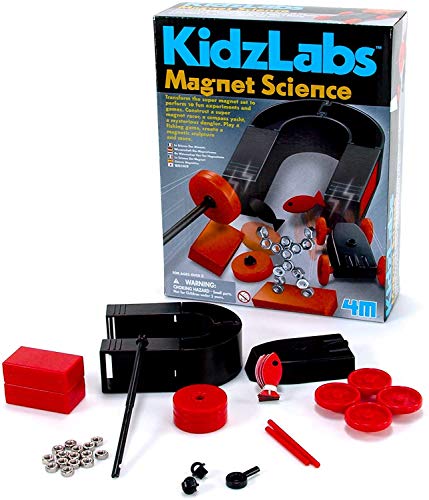
Magnet Science Kit
Best physics intro · 4M

Magnet Science Kit

Invisible-force physics you can feel in your hands. The kit runs through ten experiments and games with magnets — racing, levitation tricks, a compass — that make magnetism click as something real and a little bit magic. It's hands-on, low-mess, and genuinely teaches the push-pull rules of magnetic fields rather than just being a bag of magnets. Cheap, sturdy, and a strong first taste of physics for the eight-and-up crowd.

Builds: physics · experimenting · cause & effect

~$14· See it on Amazon
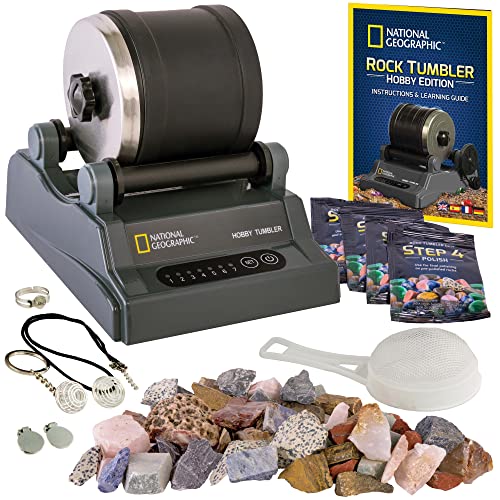
Rock Tumbler Kit — Hobby Edition
Best long project · National Geographic

Rock Tumbler Kit — Hobby Edition

The science gift that teaches patience as much as geology. Rough stones go in with grit, the motor runs for days at a time across several stages, and weeks later they pour out gemstones polished to a glassy shine — genuinely beautiful, and entirely the kid's own doing. It's a real lesson in how the planet smooths rock over time, compressed from millennia into a few weeks. Two honest caveats: the tumbler hums around the clock (basement or garage, not a bedroom), and the multi-week wait is the whole point — this is for the child who can stick with a long process, and the reward is worth it.

Builds: geology · patience · following a process

~$60· See it on Amazon
GeoSafari Ant Factory
Best living science · Educational Insights

GeoSafari Ant Factory

Living science you check on every single morning. Order live ants (a voucher's included), add the sand, and within days the colony tunnels a visible network through the clear habitat — a real, ongoing biology lesson you cannot fake with a kit. Kids watch the workers dig, haul, and cooperate, and pick up the responsibility of caring for living things along the way. It's slower and more patient than a one-off experiment, which is exactly what makes it stick; just know the ants ship separately and the colony has a natural lifespan.

Builds: biology · observation · responsibility

~$35· See it on Amazon

How much to spend

There's real science at every price here. The best under-$15 buys are the 4M single-experiment kits — Crystal Growing, the Volcano, and the Magnet kit — each a complete, satisfying project for pocket money. The $20–40 sweet spot is where most generous gifts land: Snap Circuits 203, a microscope, Beaker Creatures, or the Artie 3000 coding robot. And the one splurge worth it is the rock tumbler — a weeks-long project that ends in gemstones the kid genuinely made.

Frequently asked questions

What are the best science toys for kids?
For a single do-it-all pick, the Snap Circuits 203 kit teaches genuine electronics with no soldering and survives years of use. Beyond that, match the toy to your child: a microscope (the National Geographic Junior or, for preschoolers, the GeoSafari Jr.) for the observer; a chemistry or reaction kit (Beaker Creatures, 4M Crystal Growing) for the experimenter; and a coding robot like Artie 3000 for the builder. Every kit in this guide comes from an established science-toy maker — Snap Circuits, Learning Resources, Educational Insights, National Geographic, or 4M.
What age are these science kits for?
This guide spans roughly ages 4 to 12. The GeoSafari Jr. My First Microscope and Circuit Explorer Rover suit the youngest (4–6); Beaker Creatures is aimed at 5–8; and the meatier kits — Snap Circuits, the rock tumbler, crystal growing, the magnet kit, and Artie 3000 — are best from about 7 or 8 up. Always check the age on the listing, and remember a grown-up alongside a younger child can bridge a kit that is a year or two ahead.
Which science kits are safe to do without an adult?
The electronics and observation toys — Snap Circuits, the microscopes, the magnet kit, the ant factory, and the coding robot — are largely independent play once set up. The chemistry-style kits need a bit more supervision: crystal growing involves hot water, and the volcano and Beaker Creatures kits get messy. None use dangerous chemicals, but plan to be in the room (and over a wipeable surface) for the fizzing, growing, and erupting ones.
Are science kits with refills worth it, or do they become money pits?
It depends on the kit. Beaker Creatures and the rock tumbler do use consumable refills (more pods, more grit and rough stones), so the sticker price is not the lifetime cost. The better long-term value is in the reusable kits: Snap Circuits, the microscopes, the magnet kit, and Artie 3000 work indefinitely with no refills. If you want one purchase that keeps giving, lean toward those.
My kid says they hate science. What should I get?
Pick the toy that hides the science inside something they already like. A space-obsessed kid takes to the Circuit Explorer Rover before they would touch a circuit board; a child who loves to make things gravitates to the volcano you mould and paint, or Artie 3000 drawing their code on paper; a collector loves the gemstones a rock tumbler produces. The trick is to lead with the payoff — the glowing rover, the polished stones, the revealed creature — and let the science arrive quietly underneath.

How we choose — and a word on the links

Educational Toys Planet has specialized in learning toys since 2004. We pick independently, only from established makers, then cross-check every candidate against current availability and the major independent award and expert lists. We don't accept payment for placement.

Affiliate disclosure: the product links here are Amazon Associate links. If you buy through them we may earn a small commission at no extra cost to you — that's what keeps these guides free and updated. Prices change; tap through for Amazon's current figure. Last updated June 2026.

Related guides