Best Toys & Gifts for 9-Year-Olds (2026)

Nine is the thinking age. A nine-year-old can suddenly plan a few moves ahead, hold a multi-step problem in their head, and stick with something hard long enough to crack it. That makes them a joy to shop for — and it raises the bar. The blinking, do-it-for-you toys that worked at five fall flat now; what lands at nine is a toy that hands them a genuine challenge.

So we kept only toys we'd actually give a nine-year-old — every one from a maker with a real track record, chosen for how well it rewards a curious, capable kid, with a straight reason behind each pick.

🧸 Curating learning toys since 2004 Independent picks · no pay-for-placement

What nine-year-olds are working on

Shopping well for this age gets easier once you picture what a nine-year-old is actually practicing. The big shift is in reasoning: they can now think several steps ahead, work through a problem that doesn't yield on the first try, and — crucially — tolerate the frustration of being stuck. That's why graded logic puzzles and constraint-based building toys hit so well here; they meet a brain that's finally ready for them.

This is also the age real interests start to set in — a kid declares they love science, or coding, or a particular game — so a gift that goes a layer deeper than a toddler toy gets remembered. And the social side matters more than ever: a nine-year-old wants to play with people, win and lose well, and show off something they made. The best gift isn't the flashiest one on the shelf; it's the one that respects how much this kid can now do.

Logic & brain-teasers

Nine is when a kid can finally plan a few moves ahead and sit with a hard problem instead of bailing. These single-player puzzles reward exactly that — and keep them busy without a grown-up refereeing.

Gravity Maze Marble Logic Game
Editor’s pick · ThinkFun

Gravity Maze Marble Logic Game

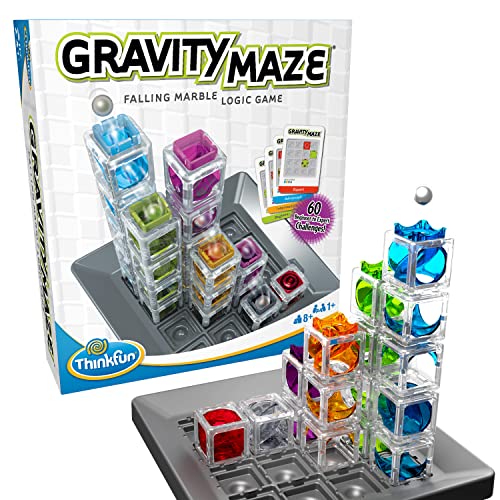
If you buy one thing on this list, make it this. A nine-year-old draws a challenge card, then has to build a tower of clear plastic shafts so a dropped marble actually reaches the target — and the only way to win is to picture the path before you place a single piece. That's planning ahead, the exact skill nine is ready for and most toys don't touch. The 60 challenges climb from genuinely easy to "wait, let me think," so it stays interesting for months instead of an afternoon. It's single-player, which makes it the rare logic toy that quietly occupies a kid on a rainy Saturday without a grown-up refereeing.

Builds: logical reasoning · spatial planning · visualization

~$20· See it on Amazon
Rush Hour Traffic Jam Logic Game
Best brain-teaser · ThinkFun

Rush Hour Traffic Jam Logic Game

The sliding-block puzzle that's been hooking kids and adults for decades, and nine is the sweet spot for it. You have to slide the other cars and trucks out of the way to free your red car — sounds trivial until the "expert" cards have you stuck for ten minutes on a six-by-six grid. What we like about it for this age: the 40 cards are graded, so a kid feels the difficulty ramp and learns to sit with a problem instead of giving up. It's compact, travels well, and a nine-year-old can play it solo on the back seat of a car.

Builds: sequential reasoning · problem solving · persistence

~$22· See it on Amazon
Kanoodle 3D Brain-Teaser Puzzle
Best under $15 · Educational Insights

Kanoodle 3D Brain-Teaser Puzzle

The little case that punches absurdly above its price. A nine-year-old fits the colored puzzle pieces into the tray to match one of 200 challenges — flat 2D ones to start, then 3D pyramids that are genuinely hard. It's pocket-sized and self-contained, which makes it the best thing on this list to throw in a bag for a restaurant, a flight, or a waiting room. Cheap enough to be a stocking stuffer, but with enough challenges to last a year.

Builds: spatial reasoning · pattern logic · focus

~$11· See it on Amazon

STEM they can build & wire

Toys that put real engineering and electronics in a nine-year-old's hands — every build is a puzzle with constraints, not just open-ended stacking.

Circuit Maze Electric Current Logic Game
Best for STEM · ThinkFun

Circuit Maze Electric Current Logic Game

Toy of the Year finalist

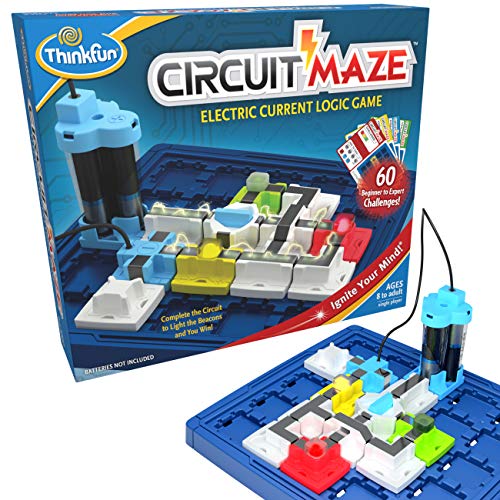
Real circuits, disguised as a puzzle. A nine-year-old places beacon and wire tokens on the grid to light up a target — and to do it they have to reason out which path actually completes the circuit, with no batteries-as-mystery-box hand-waving. It's the cleanest introduction to electricity we've found at this age, because the lights only come on when the logic is right, so the feedback is instant and honest. The challenges scale from "light one beacon" to genuinely tricky multi-token puzzles that'll stump a parent.

Builds: circuit logic · deductive reasoning · cause & effect

~$30· See it on Amazon
Circuit Maker 60-Project Electronics Kit
Best hands-on electronics · National Geographic

Circuit Maker 60-Project Electronics Kit

For the kid who's done with games and wants to build the real thing. Snap-together components let a nine-year-old wire up 60 working projects — a doorbell, a flashing light, a simple alarm — without a soldering iron or any risk. The pieces clip onto a board so there's no fiddly wiring to lose, and the project guide walks them from "what's a circuit" to "I made this buzz on purpose." It runs pricier than the games here, but it's the closest thing to a genuine electronics bench a nine-year-old can safely own.

Builds: electronics · following diagrams · experimentation

~$45· See it on Amazon
Roller Coaster Challenge Building Game
Best builder · ThinkFun

Roller Coaster Challenge Building Game

Toy of the Year finalist

Building meets brain-teaser. A nine-year-old reads a challenge card, then has to construct a working roller-coaster track — posts, track pieces, and a loop — so a marble car makes it all the way to the bottom. Unlike open-ended construction sets, every one of the 40 cards is a real puzzle with constraints, so it builds engineering thinking, not just stacking. Watching their own coaster actually run is the payoff, and the difficulty climbs steeply enough to hold a sharp nine-year-old for a long time.

Builds: engineering logic · spatial reasoning · planning

~$38· See it on Amazon

Real science, real results

The hands-on kits that turn "science" from a school subject into something a nine-year-old does at the kitchen table — and gets to keep.

7-Crystal Growing Science Kit
Best science kit · 4M

7-Crystal Growing Science Kit

A first real chemistry experiment with a payoff a nine-year-old can keep. You mix the solution, set it up, and over days actual crystals grow — seven colors, with little display cases to show them off. The lesson that sticks isn't just "crystals are cool"; it's that some science takes patience and careful measuring, and rushing it ruins the result. It needs a bit of grown-up help with the hot water at the start, and then it's mostly waiting and watching — which is exactly the point.

Builds: patience · observation · chemistry basics

~$19· See it on Amazon
Nancy B’s Science Club Microscope
Best for curious kids · Educational Insights

Nancy B’s Science Club Microscope

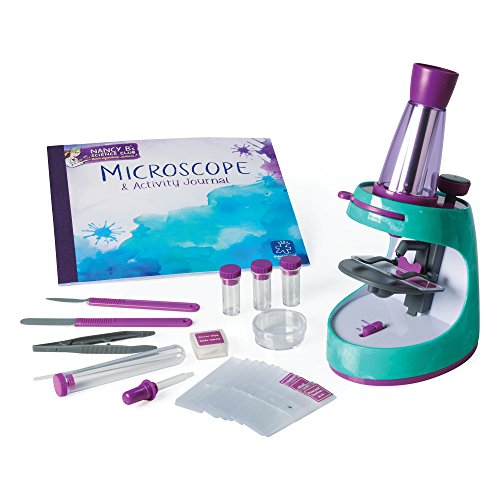
A real microscope, not a toy that says "microscope" on the box. It magnifies up to 400x with a built-in light, so a nine-year-old can actually see the structure of a leaf, a feather, or pond water — the moment that turns "science class" into "I want to look at everything." It comes with a journal that prompts kids to draw and write what they see, which quietly builds the habit of observing carefully and recording it. Sensibly priced for a first scope, and sturdy enough to survive an enthusiastic owner.

Builds: observation · scientific notes · fine motor

~$15· See it on Amazon
Spy Science 10-Mission Activity Kit
Best for the under-$15 splurge · National Geographic

Spy Science 10-Mission Activity Kit

Detective play with a real science backbone. A nine-year-old works through ten secret missions using actual gadgets and techniques — invisible ink, fingerprint dusting, code-cracking — that sneak in genuine forensic-science ideas under the cover of spy fun. It hits the exact nine-year-old sweet spot between "I'm too old for pretend" and "I still love a mission," and it's the kind of kit that pulls in a friend or a sibling. Inexpensive, and a reliable hit for kids who'd rather investigate than build.

Builds: deduction · reading clues · imaginative play

~$14· See it on Amazon

Game night & coding

One genuine family strategy game and one coding robot — the two picks here that grow with a sharp nine-year-old instead of being outgrown in a month.

Labyrinth Moving Maze Board Game
Best family game · Ravensburger

Labyrinth Moving Maze Board Game

The family game that finally levels the playing field between a nine-year-old and the grown-ups. On your turn you slide a row of the maze to shift the walls — opening a path to your treasure while quietly blocking everyone else. It rewards thinking a move or two ahead, which nine-year-olds are newly capable of, and the board changes every single turn so it never plays the same way twice. Quick enough for a weeknight, deep enough that nobody's bored, and it's a genuine 2-to-4-player game, not a kids-only one.

Builds: strategic thinking · planning ahead · turn-taking

~$30· See it on Amazon
Artie 3000 The Coding Robot
Best coding toy · Educational Insights

Artie 3000 The Coding Robot

Coding a nine-year-old can see happen. You program Artie from a phone or computer and it drives around drawing the design you coded — so an abstract idea like "loop this four times" becomes a shape on the paper in front of them. It scales with the kid: drag-and-drop blocks to start, then real text languages like JavaScript and Python when they're ready, so it doesn't get outgrown in a month. The drawing hook is what sets it apart — kids debug their code eagerly because they can see exactly where the line went wrong.

Builds: coding logic · sequencing · debugging

~$39· See it on Amazon

How much to spend

You really don't need to spend much. Several of the best toys here are under $20Kanoodle, the Spy Science kit, Nancy B's microscope, the crystal-growing kit, Gravity Maze, and Rush Hour all punch well above their price. The $30–40 range (Circuit Maze, the Roller Coaster Challenge, Labyrinth, and the Artie coding robot) is where most generous birthday gifts land. And the one splurge worth it for a true builder is the National Geographic Circuit Maker kit — 60 real electronics projects in one box.

Frequently asked questions

What are the best educational toys for a 9-year-old?
Our top pick is ThinkFun’s Gravity Maze — a single-player marble-logic game that builds the plan-ahead thinking nine-year-olds are newly ready for. For a well-rounded gift haul, mix categories: a logic game (Gravity Maze or Rush Hour), a build-and-wire STEM kit (Circuit Maze or the National Geographic electronics kit), a real science kit (a crystal-growing set or a microscope), and one family strategy game (Ravensburger Labyrinth). Every toy in this guide is from an established maker like ThinkFun, Educational Insights, 4M, or National Geographic.
How much should I spend on a gift for a 9-year-old?
You don’t need to spend much to land a great gift. Several of the best picks here are under $20 — Kanoodle, the Spy Science kit, Nancy B’s microscope, the crystal-growing kit, Gravity Maze, and Rush Hour all over-deliver for the price. The $30–40 range (Circuit Maze, Roller Coaster Challenge, Labyrinth, the Artie coding robot) is where most generous birthday gifts land. The one splurge worth considering is the National Geographic Circuit Maker electronics kit, around $45, for a kid who genuinely loves to build.
What toys help a 9-year-old’s development the most?
At nine, the leap is in reasoning: kids can plan several steps ahead, hold a multi-part problem in their head, and stick with something hard. Toys that demand that — graded logic puzzles (Gravity Maze, Rush Hour, Kanoodle), constraint-based building (Circuit Maze, Roller Coaster Challenge), and real coding (Artie) — push that growth far more than toys that simply entertain. Hands-on science kits add patience and careful observation. As a rule, pick the toy that makes the child do the thinking, not the one that performs for them.
Are board games or solo puzzles better for a 9-year-old?
Both, for different reasons. Solo logic games like Gravity Maze, Rush Hour, and Kanoodle are perfect for independent, screen-free downtime — a nine-year-old can play them alone and feel the difficulty climb. A strategy board game like Ravensburger Labyrinth does something a solo puzzle can’t: it builds the social side — reading opponents, taking turns gracefully, winning and losing well. The ideal gift mix for this age usually includes one of each.
What’s a good first coding or electronics gift at this age?
Nine is an excellent age to start, because kids can now follow multi-step logic and debug their own mistakes. For coding, the Artie 3000 robot is our pick — it draws the design you program, so an abstract idea like a loop becomes a visible shape, and it scales from drag-and-drop blocks up to real Python and JavaScript. For electronics, the National Geographic Circuit Maker kit lets them snap together 60 working projects with no soldering. Both reward the kind of step-by-step thinking that nine-year-olds are just growing into.

How we choose — and a word on the links

Educational Toys Planet has specialized in learning toys since 2004. We pick independently, only from established makers, then cross-check every candidate against current availability and the major independent award and expert lists. We don't accept payment for placement.

Affiliate disclosure: the product links here are Amazon Associate links. If you buy through them we may earn a small commission at no extra cost to you — that's what keeps these guides free and updated. Prices change; tap through for Amazon's current figure. Last updated June 2026.

Related guides