Best Thinking Skills Toys for Kids (2026)

Thinking skills don't develop from flashcards alone — they grow when kids wrestle with a puzzle that won't cooperate, figure out how magnetic tiles balance, or deduce the rules of a new game by trial and error. The toys on this page are chosen because they create those productive friction moments that actually build the brain.

A good thinking-skills toy asks the child to make decisions, notice cause and effect, or plan ahead — not just follow a script. We've grouped our picks by the type of cognitive work they demand, from early spatial reasoning and sorting to strategic multi-player games, so you can match the toy to what your child is ready for.

🧸 Curating learning toys since 2004 Independent picks · no pay-for-placement

Sorting, Sequencing & Early Logic

These hands-on manipulatives ask toddlers and preschoolers to classify, order, and notice patterns — the foundation of all later logical thinking.

Wooden Shape Sorter
Best first logic toy for toddlers · Early Learning Centre

Wooden Shape Sorter

Sorting a shape through the wrong hole is genuinely informative for a 18-month-old — it's real hypothesis-testing at toddler scale. The wooden construction is sturdy enough to survive the frustration throws. The limited number of shapes keeps the challenge honest without overwhelming beginners. One trade-off: there's no storage tray, so pieces scatter.

Builds: shape recognition · problem-solving · hand-eye coordination

~$20· See it on Amazon
Wooden Stacking Monkeys Toy
Best for sequencing and color logic · Battat Education

Wooden Stacking Monkeys Toy

The interlocking rings add a light sequencing challenge on top of basic stacking — kids quickly discover that order matters for the structure to hold. It's Montessori-aligned in the sense that the toy corrects the child, not the parent. Priced fairly for what you get. The color palette is pleasant and not overstimulating, which matters for focused play.

Builds: sequencing · color matching · fine motor planning

~$15· See it on Amazon
Wooden ABC Peg Puzzle
Best letter-recognition thinking starter · Battat

Wooden ABC Peg Puzzle

Each peg piece pairs a letter with a critter illustration, giving kids two cues to reason from — shape and image — which reinforces memory better than flashcards. The pegs make self-correction obvious and satisfying. At this price it's an easy add-on gift. It won't hold a 4-year-old's attention for long once the letters are memorized, so think of it as a bridge toy.

Builds: letter recognition · visual discrimination · problem-solving

~$12· See it on Amazon
House Lace-a-Shape Game
Best for pattern recognition and focus · Bigjigs Toys

House Lace-a-Shape Game

Thirty geometric shape cards with varying lacing paths means kids encounter genuinely different challenges each session, not the same loop repeated. Lacing demands a sequence of planned moves — wrong turns are immediately visible. It's quiet, portable, and keeps kids focused longer than you'd expect. The laces can fray after heavy use, so check them periodically.

Builds: pattern recognition · sequencing · sustained attention

~$24· See it on Amazon

Spatial Reasoning & Construction

Building and assembling toys force kids to visualize in 3D, plan steps, and self-correct — skills that transfer directly to math and science.

Magrific 3D Magnetic Tile 70-Piece Set
Best open-ended spatial builder · Cra-Z-Art

Magrific 3D Magnetic Tile 70-Piece Set

The 3D geometric pieces push kids past flat-panel building into true volumetric thinking, which is a meaningful step up from standard magnetic tiles. Kids must predict how faces will connect and whether a structure will self-support — and they get instant physical feedback when it doesn't. The 70-piece count is enough for real architectural ambition without becoming overwhelming. It's pricier than basic tile sets but the cognitive demand is genuinely higher.

Builds: spatial reasoning · structural planning · geometric thinking

~$48· See it on Amazon
Builder Construction Set 136-Piece
Best STEM builder for ages 3–7 · BRIO

Builder Construction Set 136-Piece

Mixing wooden and plastic components means kids must figure out which connector fits which material — there's genuine problem-solving baked into every assembly. The instruction cards show finished models without dictating every step, nudging children to interpret a goal rather than just follow directions. It's the priciest pick in this group but the piece variety justifies it for kids who build obsessively. Pieces are chunky enough for 3-year-olds but challenging enough to hold a 7-year-old.

Builds: engineering thinking · spatial planning · cause-and-effect reasoning

~$57· See it on Amazon
Remote Control Train Set
Best for cause-and-effect and directional thinking · BRIO World

Remote Control Train Set

Operating a remote train on a track teaches kids to think ahead — if you don't slow down before the curve, the train derails. That feedback loop is more instructive than it looks. Combining it with existing BRIO track lets children design layouts that test their own hypotheses about speed and routing. The remote is simple enough for 3-year-olds to manage. Battery dependency is the main running cost to budget for.

Builds: directional reasoning · cause-and-effect thinking · planning

~$44· See it on Amazon

Language, Literacy & Academic Reasoning

Workbooks and letter games that ask kids to decode, recognize, and reason with words and numbers rather than just memorize them.

Hot Dots Preschool Essentials Reading & Math Workbook
Best self-correcting academic reasoning tool · Educational Insights

Hot Dots Preschool Essentials Reading & Math Workbook

The interactive Hot Dots pen gives children immediate right/wrong feedback without a parent needing to hover, which turns seat work into genuine problem-solving rather than guess-and-check copying. The preschool level covers both reading and math, so one book builds across domains. Kids who resist traditional worksheets often engage here because the pen makes it feel like a game. Requires the Hot Dots pen, sold separately — factor that into the budget.

Builds: logical deduction · early numeracy · reading comprehension

~$24· See it on Amazon
Hot Dots First Grade Essentials Reading & Math Workbook
Best for building reasoning in early readers · Educational Insights

Hot Dots First Grade Essentials Reading & Math Workbook

First-grade content requires children to apply rules, not just recall facts — this workbook leans into that with multi-step questions that reward thinking over guessing. The self-correcting format means errors are informative rather than discouraging. It's a practical bridge for kids who've outgrown preschool workbooks but aren't ready for independent chapter-book reading. Again, the Hot Dots pen is a prerequisite purchase.

Builds: reading comprehension · mathematical reasoning · logical deduction

~$22· See it on Amazon

Strategy, Planning & Game-Based Thinking

Games where winning requires predicting what happens next, weighing options, and learning that a bad plan can be revised — not just restarted.

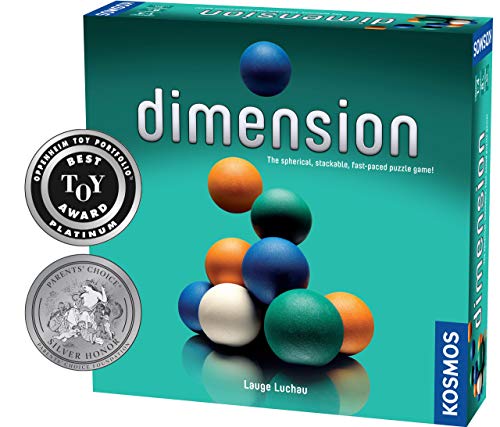
Dimension 3D Fast-Paced Puzzle Game
Best strategy game for ages 8+ · Kosmos

Dimension 3D Fast-Paced Puzzle Game

Players race to arrange colored spheres in a 3D pyramid following constraint cards — every move requires checking multiple rules simultaneously, which is genuine executive-function work. The simultaneous play format keeps all four players mentally active at once, avoiding the downtime boredom of turn-based games. It scales well for mixed-age groups because faster thinkers aren't slowed down by younger players. The setup explanation takes patience the first time, but kids ages 8 and up pick it up quickly.

Builds: spatial strategy · quick decision-making · rule-based reasoning

~$40· See it on Amazon
Campfire Chatmallows Creative Story Cubes & Social Skills Activities
Best for narrative reasoning and flexible thinking · Educational Insights

Campfire Chatmallows Creative Story Cubes & Social Skills Activities

Rolling story dice and building a coherent shared narrative requires kids to hold a thread of logic, adapt to unexpected prompts, and consider other players' perspectives — that's higher-order thinking dressed up as campfire fun. It works well for ages 4–8 with no reading required. Unlike competitive games, the cooperative storytelling format means no one loses, which keeps anxious thinkers engaged. The campfire theme is engaging without being gimmicky.

Builds: narrative reasoning · creative problem-solving · social cognition

~$19· See it on Amazon
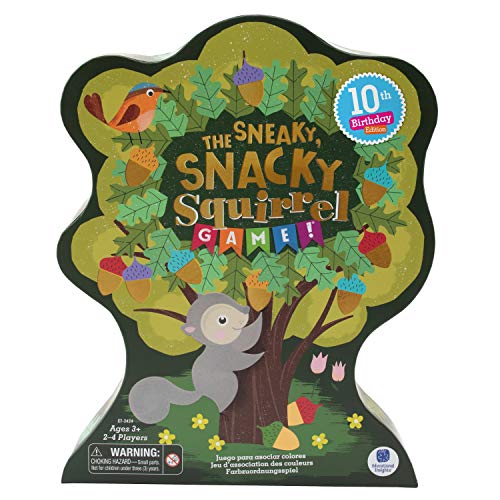
Special Edition The Sneaky, Snacky Squirrel Game
Best first strategy game for preschoolers · Educational Insights

Special Edition The Sneaky, Snacky Squirrel Game

The spinner mechanics introduce mild strategic thinking — collecting acorns of the right color before opponents do — without demanding reading or complex rules. It's a genuinely fair entry point to game-based strategy for ages 3–5. The special edition adds enough variety to keep repeat plays interesting. A consistent parent favorite because setup is fast and games end in under 20 minutes, which matches preschool attention spans honestly.

Builds: color matching · turn-based planning · emotional regulation

~$27· See it on Amazon

How we choose — and a word on the links

Educational Toys Planet has specialized in learning toys since 2004. We pick independently, only from established makers, then cross-check every candidate against current availability and the major independent award and expert lists. We don't accept payment for placement.

Affiliate disclosure: the product links here are Amazon Associate links. If you buy through them we may earn a small commission at no extra cost to you — that's what keeps these guides free and updated. Prices change; tap through for Amazon's current figure. Last updated June 2026.

Related guides