Best Life Skills Learning Toys for Kids (2026)

Life skills toys work best when kids don't realize they're practicing anything useful. The right pretend kitchen, cash register, or lacing card sneaks in lessons about counting, sequencing, patience, and cooperation while children are simply playing.

We looked for toys with realistic enough props to feel credible, open-ended enough play to stay interesting past one afternoon, and age ranges that actually match the skill being built. A cash register that beeps meaninglessly teaches less than one that requires a child to count back change — and you'll see that distinction reflected in every pick below.

🧸 Curating learning toys since 2004 Independent picks · no pay-for-placement

Pretend Work & Community Roles

Role-play sets that mirror real jobs and adult routines help kids rehearse social scripts, understand cause-and-effect, and build early economic thinking.

Interactive Kids Cash Register with Scanner & Sounds – 26 Pieces Pretend Play Shopping
Best first money & transaction toy · Battat

Interactive Kids Cash Register with Scanner & Sounds – 26 Pieces Pretend Play Shopping

The scanner, drawer, and play coins give kids enough realistic props to actually practice a transaction rather than just bang buttons. At 26 pieces there's enough variety to run a proper shop, but the set is compact enough to avoid toy-room chaos. The one real trade-off: the coins are somewhat large and simplified, so you'll want to supplement with real pennies once a child is ready for authentic denomination practice.

Builds: counting · turn-taking · economic thinking

~$25· See it on Amazon
Wooden Barista Playset – Realistic Toy Coffee Maker with 22 Accessories
Best for hospitality & service role-play · Battat Education

Wooden Barista Playset – Realistic Toy Coffee Maker with 22 Accessories

At under $14, this wooden coffee-maker set over-delivers. Kids practice taking orders, preparing a 'drink,' and handing it over — a natural script for social skills and turn-taking. The wooden construction holds up to genuine toddler enthusiasm. Fair warning: the accessories are small enough that this is squarely a 2+ toy rather than a baby toy, despite the low price point.

Builds: sequencing · social scripts · fine motor

~$13· See it on Amazon
Daniel Tiger's Neighborhood Welcome to Main Street Game
Best social-emotional life-skills game for preschoolers · Briarpatch

Daniel Tiger's Neighborhood Welcome to Main Street Game

Daniel Tiger's curriculum around feelings, friendship, and community roles is well-researched and this board game translates those lessons into cooperative play rather than passive screen watching. Kids aged 2 to 6 get to practice waiting, sharing, and helping — social life skills that don't always have a dedicated toy category. Parents familiar with the show will find plenty of conversation hooks built into the gameplay.

Builds: emotional regulation · turn-taking · community awareness

~$22· See it on Amazon

Fine Motor & Hand-Eye Coordination

Threading, pegging, and sorting activities build the precise hand control children need for dressing themselves, writing, and dozens of daily self-care tasks.

Wooden Lacing Toy – Educational Threading Activity for Toddlers
Best for shoelace-readiness skills · Battat Education

Wooden Lacing Toy – Educational Threading Activity for Toddlers

Lacing toys are one of the most direct bridges between play and real-world self-care — specifically, learning to tie shoes. This wooden version from Battat is chunky enough for 3-year-old hands but the lacing holes are sized to build genuine dexterity. The Montessori-aligned design means there's no electronic distraction, just the quiet satisfaction of threading through correctly. It's not flashy, which is exactly the point.

Builds: lacing · hand-eye coordination · concentration

~$17· See it on Amazon
House Lace-a-Shape Game – 30 Geometric Shape Lacing Cards & 6 Laces
Best lacing set for older toddlers & preschoolers · Bigjigs Toys

House Lace-a-Shape Game – 30 Geometric Shape Lacing Cards & 6 Laces

Thirty cards give enough variety that this doesn't get boring in a single sitting, and the geometric shapes quietly introduce spatial reasoning alongside the hand-skill practice. The laces are color-coded, which helps younger children self-correct without adult intervention — a genuine independence-building feature. It costs a few dollars more than budget alternatives, but the card quality justifies it.

Builds: fine motor · pattern recognition · persistence

~$24· See it on Amazon
Fine Motor Peg Toy for Toddlers & Kids, Montessori Educational Developmental
Best entry-level fine motor toy under $12 · Battat Education

Fine Motor Peg Toy for Toddlers & Kids, Montessori Educational Developmental

Pegging toys directly train the pincer grip children use for buttons, zippers, and eventually pencils. At $12 this is one of the most cost-effective genuine skill-builders in the guide. The Montessori approach means open-ended sorting rather than a single 'right answer,' which extends play life considerably. Best used around 18 months to 3 years; older kids will outgrow it quickly.

Builds: pincer grip · color sorting · hand strength

~$12· See it on Amazon
Wooden Activity Walker – 9 Educational Activities – Learning & Walking Toy
Best all-in-one life-skills toy for 1-year-olds · Battat

Wooden Activity Walker – 9 Educational Activities – Learning & Walking Toy

Nine distinct activities on one walker is a real advantage — a child who has mastered walking can still engage the bead mazes, shape sorters, and activity panels for months afterward. It's among the pricier picks here at around $53, but it replaces what would otherwise be several separate toys. The trade-off is size: this takes up meaningful floor space and isn't easy to tuck away.

Builds: walking confidence · shape sorting · cause-and-effect

~$53· See it on Amazon
Wooden ABC Peg Puzzle for Toddlers – Educational Shape Sorter with Colorful Critters
Best dual-purpose alphabet & fine motor toy · Battat

Wooden ABC Peg Puzzle for Toddlers – Educational Shape Sorter with Colorful Critters

Pairing alphabet recognition with peg-puzzle mechanics means children build reading-readiness skills and hand strength in the same session. The colorful animal illustrations give natural memory hooks ('B is for the blue bird'). At $12 this is easy to recommend without reservation; the only note is that the pegs are sized for toddler hands so older preschoolers may find them too easy.

Builds: letter recognition · pincer grip · color matching

~$12· See it on Amazon

Early Math & Money Sense

Counting, matching, and transaction play lay the groundwork for budgeting and number fluency before formal schooling begins.

Magnetic Fishing Game for Toddlers with Alphabet Letters – Early Learning
Best for letter recognition + hand control · Battat Education

Magnetic Fishing Game for Toddlers with Alphabet Letters – Early Learning

Fishing games are a perennial hit because the magnetic 'catch' gives satisfying immediate feedback. This version doubles as alphabet practice, so the hand-control skill-building comes with early literacy alongside it. The set works well for 2- to 4-year-olds; by five most children will find the fishing mechanic too easy, though they can still use the letters independently.

Builds: letter recognition · hand-eye coordination · patience

~$27· See it on Amazon
First 100 Words, Early Learning Game for Toddlers
Best vocabulary-building game for 2-year-olds · Briarpatch

First 100 Words, Early Learning Game for Toddlers

Based on the popular board book series, this card game gives children a familiar visual vocabulary as a scaffold for matching and naming — a genuinely practical language life skill. The rules are simple enough for just-turned-2 children to play with a parent without full frustration. It's not going to entertain a 5-year-old for long, but that's an honest age-range reality rather than a flaw.

Builds: vocabulary · matching · turn-taking

~$17· See it on Amazon
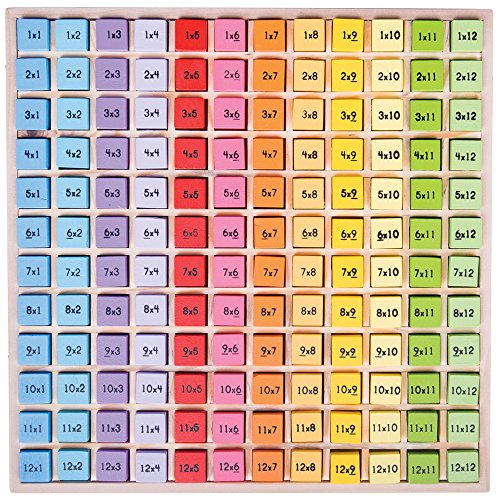
Multiplication Table Tray | Kids Wooden Board Game for Times Tables
Best hands-on times-tables tool for school-age kids · Bigjigs Toys

Multiplication Table Tray | Kids Wooden Board Game for Times Tables

A physical tray that lets a child place answers and immediately see whether they fit is a more kinesthetic approach to times tables than flashcards alone. The Montessori-style self-correction means less parental intervention and more genuine understanding. This is best suited for 6- to 9-year-olds who are actively learning multiplication; it won't mean much to a younger child just exploring the pieces.

Builds: multiplication · number sense · self-checking

~$21· See it on Amazon

Kitchen & Food Prep Play

Pretend cooking and food sorting sets introduce sequencing, measurement concepts, and the everyday life skill of preparing food.

Stir & Sort Food Court Play Food Set – 102 Pieces Toddler Pretend Play Kitchen
Best value high-piece-count play food · Battat Education

Stir & Sort Food Court Play Food Set – 102 Pieces Toddler Pretend Play Kitchen

102 pieces for under $12 is genuinely impressive, and the 'stir and sort' mechanic gives kids an actual activity rather than just static plastic food. Children practice sorting by type, color, and category — a foundational life-skills habit. The pieces are lightweight plastic; they won't feel premium, but for a high-volume food court scenario that's actually fine.

Builds: categorization · sequencing · cooperative play

~$12· See it on Amazon

How we choose — and a word on the links

Educational Toys Planet has specialized in learning toys since 2004. We pick independently, only from established makers, then cross-check every candidate against current availability and the major independent award and expert lists. We don't accept payment for placement.

Affiliate disclosure: the product links here are Amazon Associate links. If you buy through them we may earn a small commission at no extra cost to you — that's what keeps these guides free and updated. Prices change; tap through for Amazon's current figure. Last updated June 2026.

Related guides