

Best Outdoor Play Toys for Kids (2026)

The best outdoor toys don't entertain a child — they hand the outdoors back to them. A bug jar, a pair of binoculars, a patch of dirt and a trowel: each one gives a kid a reason to crouch, look closely, move their body, and notice the living world. That's the real benefit of outdoor play — focus, coordination, curiosity, and calm that no screen delivers.

So we kept only gear we'd actually send a child outside with — every one from a maker with a real track record, chosen because it rewards time spent outdoors rather than replacing it, with a genuine reason behind each pick.

🧸 Curating learning toys since 2004 Independent picks · no pay-for-placement

Why outdoor play is worth the mud

The case for outdoor play is unusually strong, and it isn't just nostalgia. Running, climbing, and balancing build the gross-motor strength and core stability that a generation of screen-heavy childhoods is visibly losing. Looking for bugs, birds, and growing things trains real attention — sustained, self-directed focus on something that isn't designed to grab it. And sunlight, fresh air, and movement do measurable good for a child's mood, sleep, and ability to settle.

Just as important, the outdoors is the most open-ended "toy" there is. A stick is a sword, a fishing rod, or a magic wand; a puddle is a science lab. The gear below works precisely because it doesn't compete with that — it gives a child a small mission (catch it, grow it, find it, balance across it) and then steps out of the way. The best outdoor gift isn't the loudest or the flashiest; it's the one that gets a kid out the door and looking up.

Little naturalists & bug hunters

The heart of outdoor play is paying close attention to the living world. These tools turn "let's go outside" into looking, catching, and genuinely caring about what's out there.

GeoSafari Jr. Bugnoculars
Editor’s pick · Educational Insights

GeoSafari Jr. Bugnoculars

If you buy one outdoor toy, make it this. It's a clever two-in-one: a clear bug-catching jar with built-in 2x magnifying lenses in the lid, so a child can scoop up a beetle or a worm and study it eye-to-eye without ever picking it up. That little design choice is the whole point of outdoor play done well — it turns "ew, a bug" into "look how many legs it has," and it gets kids crouching, looking closely, and asking questions. Cheap, nearly indestructible, and the rare nature toy a three-year-old and a seven-year-old will fight over. Just remember to let the bug go at the end.

Builds: observation · curiosity about nature · fine motor

~$14· See it on Amazon
GeoSafari Jr. Critter Habitat
Best bug home · Educational Insights

GeoSafari Jr. Critter Habitat

A proper temporary home for the caterpillar, snail, or roly-poly your child can't bear to leave behind. It handles wet or dry habitats, has a magnifying lid for close study and air holes for the critter, and the over-the-shoulder strap means it travels on the hunt. The real lesson here is gentle responsibility — kids learn that a living thing needs the right leaves, a little water, and to be released where you found it. A great companion to the Bugnoculars for a child who's genuinely caught the nature bug.

Builds: empathy for living things · observation · responsibility

~$27· See it on Amazon
GeoSafari Jr. Kidnoculars
Best under $10 · Educational Insights

GeoSafari Jr. Kidnoculars

Real working binoculars built for the under-five crowd — big soft eyepieces that fit a small face, a focus-free design so there are no fiddly dials to frustrate, and a chunky body made to be dropped. Handing a toddler their "very own binoculars" is a reliable way to get them looking up at birds, out at the horizon, and genuinely paying attention to the world instead of their feet. It's a few dollars, it's near-indestructible, and it's the kind of small gift that gets outsized play.

Builds: focus · observation · outdoor curiosity

~$7· See it on Amazon

Diggers & growers

Dirt, sand, and seeds are some of the best open-ended materials a child can get their hands into — sensory, patient, and quietly teaching where things come from.

Gardening Caddy with Tools
Best for the garden · Bigjigs

Gardening Caddy with Tools

Real, working garden tools sized for small hands — a sturdy wooden caddy holding a trowel, fork, rake, and more, not flimsy beach-toy plastic. A child who plants and waters their own patch learns patience and cause-and-effect on nature's timeline, which no app can fake, and the digging itself is a genuine fine-motor and upper-body workout. The wooden handles hold up to actual dirt and weather far better than the dollar-store sets. Hand it over with a packet of fast-growing seeds (radishes, sunflowers) so the payoff comes quickly.

Builds: responsibility · patience · hand strength

~$36· See it on Amazon
Sand Play Set
Best for the sandbox · Green Toys

Sand Play Set

The sandbox classic, done responsibly: a bucket, shovel, rake, and sand-mold star, all molded from recycled milk jugs in the USA with no BPA or phthalates — the stuff a toddler will absolutely put near their mouth. Sand and water play is foundational sensory work; scooping, pouring, and packing builds the hands and the early-physics intuition for "how much fits." It's dishwasher-safe (a bigger deal than it sounds after a day at the beach), and the pieces are tough enough to survive being left out in the yard.

Builds: sensory play · imaginative play · fine motor

~$20· See it on Amazon
Sprout & Grow Window
Best first science · Educational Insights

Sprout & Grow Window

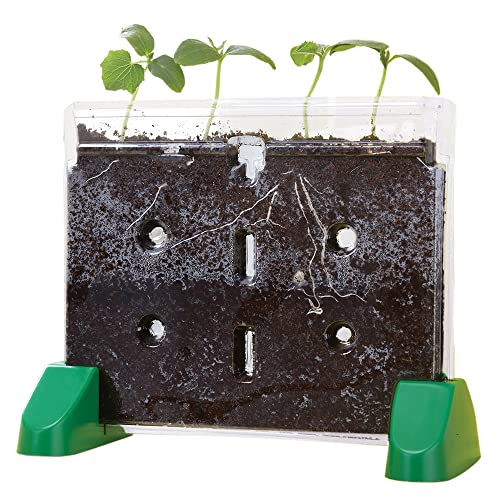
One of the best ways to make a young child care about growing things: a clear-walled planter that lets them watch roots push down and shoots push up, the part of a plant you normally never see. A bean seed becomes a daily ritual — check it, water it, measure it — and "where does food come from" stops being abstract. It includes a few seeds and a growth chart to get started. Genuinely educational, and a gentle on-ramp to a real outdoor garden bed later.

Builds: patience · observation · understanding plants

~$32· See it on Amazon

Get-moving play

Outdoor play should also mean bodies in motion. These get kids balancing, aiming, hiking, and hunting instead of sitting still.

Hop to 10 Stepping Stones
Best for active play · Educational Insights

Hop to 10 Stepping Stones

Backyard balance training that doubles as a math toy. Kids hop between the numbered domes — laying out an obstacle course, "crossing the lava," counting as they go — building the core stability and coordination that hours of screen time quietly erode. The rubberized non-slip bases grip grass, patio, or carpet, so they work outdoors in summer and indoors on a rainy day. They stack for storage, and the open-ended "make your own course" play keeps a wide age range moving.

Builds: balance · gross motor · counting

~$32· See it on Amazon
Let’s Explore Hiking Play Set
Best for little explorers · Melissa & Doug

Let’s Explore Hiking Play Set

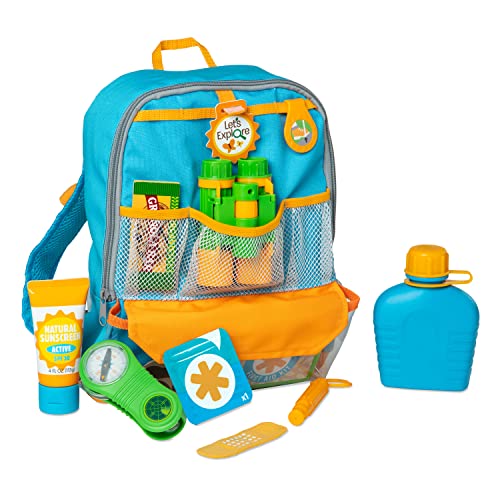
A 23-piece kit of kid-sized hiking gear — binoculars, a compass, a map, a flashlight, a bug jar, a walking-stick badge — that turns a walk around the block into an expedition. The magic is motivational: a reluctant walker who'd whine after fifty yards will hike a whole trail when they're "the explorer" with their own pack. The pieces are chunky and durable in the way Melissa & Doug does well, and there's no screen and no batteries to die mid-adventure. It pairs naturally with a real walk in the woods.

Builds: imaginative play · nature vocabulary · outdoor confidence

~$18· See it on Amazon
Let’s Explore Scavenger Hunt Set
Best for road trips & walks · Melissa & Doug

Let’s Explore Scavenger Hunt Set

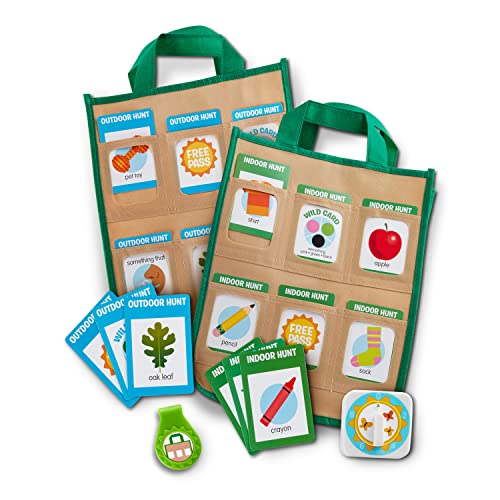
Eighty double-sided cards that send kids hunting for things outdoors and in — a red leaf, something round, a bird, a stop sign. It's the cheap, no-batteries antidote to "I'm bored," and it works because it gives an aimless walk a mission. We like it for parks, campsites, the backyard, and surprisingly well in the car on a long drive. It quietly builds the noticing-and-naming habit that good nature observation is built on, and it pulls the whole family into the game.

Builds: observation · matching · family time

~$11· See it on Amazon
K’s Kids Bowling Friends Play Set
Best backyard game · Melissa & Doug

K’s Kids Bowling Friends Play Set

Soft fabric bowling for the backyard or the living room: six plush animal pins, a squishy ball, and a carry case, so nothing gets dented and nobody gets hurt when a two-year-old hurls the ball sideways. It's a low-stakes way into aiming, rolling, and the genuinely hard preschool skill of taking turns and waiting. Lightweight enough to toss in a bag for the park, washable when it inevitably gets grass-stained, and a good first "sport" for a child not ready for anything competitive.

Builds: aiming & coordination · turn-taking · gross motor

~$23· See it on Amazon

A couple more we'd happily gift

Two that didn't fit a category but earn a mention. For a few dollars, a Melissa & Doug sidewalk-chalk set is the most reliable "go outside" toy ever made — driveways become art, hopscotch, and roads for toy cars. And for the child who wants to keep the bug they found, the GeoSafari Jr. Ladybug Garden actually ships live ladybugs to raise and release. Both are small money for a lot of outdoor time.

How much to spend

Outdoor play is mercifully cheap to start. Several of the best picks here are under $15 — the Bugnoculars, the Kidnoculars, and the Scavenger Hunt cards all punch far above their price and make great stocking stuffers or Easter-basket fillers. The $18–32 range (Hiking Set, Green Toys sand, Critter Habitat, Stepping Stones, Grow Window) is where most generous birthday gifts land. The one relative splurge is the Bigjigs gardening caddy — worth it for a child who's genuinely into growing things, since real tools last years.

Frequently asked questions

What are the benefits of outdoor play for kids?
Outdoor play does several things at once that indoor play and screens cannot. It builds gross-motor strength, balance, and coordination through running, climbing, and balancing; it develops focus and observation by giving kids real things to notice (a bug, a bird, a growing seed); and it supports mood, sleep, and attention — sunlight and movement are genuinely good for a child's regulation. Unstructured outdoor time is also where a lot of imaginative and problem-solving play happens, because nature is open-ended in a way a single-purpose toy never is.
What are the best toys to encourage outdoor play?
Pick toys that send kids outside and then get out of the way. A bug catcher or magnifier (like the GeoSafari Jr. Bugnoculars) and kid binoculars turn a yard into a place worth exploring; real garden tools and a grow-window connect kids to where food comes from; and active gear — stepping stones, soft bowling, a scavenger hunt — keeps bodies moving. Every toy in this guide is from an established maker like Educational Insights, Melissa & Doug, or Green Toys, and is chosen to reward time spent outdoors rather than replace it.
What age is best for outdoor exploration toys?
Most of the picks here suit ages 3 to 7, with a couple (the focus-free Kidnoculars, the soft bowling set) working well from about age 2. Bug viewers, scavenger-hunt cards, and a grow-window are easy wins for preschoolers, while stepping stones and a real gardening set keep older kids engaged. Always check the age note on each item — we flag anything that skews very young or older, and we deliberately left out gear meant for tweens and adults.
How do I get a reluctant child to play outside?
Give them a job and a prop. A child who won't go for a "walk" will go on an "expedition" with their own hiking set, or hunt for items on a scavenger-hunt card, or look for bugs with their very own bug jar. The trick is to make outdoors a place where something specific happens, not just open air. Start small — the backyard or the block — keep it short and successful the first few times, and let them lead the looking.
Are these outdoor toys durable enough to leave outside?
Mostly yes, with common sense. Green Toys sand gear and the rubberized stepping stones are built to live outdoors and hose off. Wooden tools (the Bigjigs gardening caddy) and anything with a lens or a fabric case last far longer if they come back inside after play, especially over winter or in damp weather. None of these have electronics to worry about except the simple flashlight in the hiking set, so a little rain won't ruin them — but they'll all last years longer with a bit of care.

How we choose — and a word on the links

Educational Toys Planet has specialized in learning toys since 2004. We pick independently, only from established makers, then cross-check every candidate against current availability and the major independent award and expert lists. We don't accept payment for placement.

Affiliate disclosure: the product links here are Amazon Associate links. If you buy through them we may earn a small commission at no extra cost to you — that's what keeps these guides free and updated. Prices change; tap through for Amazon's current figure. Last updated June 2026.

Related guides