Best Forensic Science Kits & Detective Toys for Kids (2026)

Forensic science is the rare STEM hook that sells itself. Lifting a fingerprint, reading a clue, ruling out a suspect — it's observation, deduction, and lab technique dressed up as a mystery, and most kids will happily do an hour of careful science if you call it solving a case. The trick is telling the real kits from the costume-box ones: half of what's marketed as "detective" is a magnifying glass and a plastic badge.

So we kept only the kits, games, and tools that actually teach the method — collect evidence, examine it, reason from it — every one from a maker with a real track record, with a genuine reason behind each pick.

🧸 Curating learning toys since 2004 Independent picks · no pay-for-placement

What makes a forensic kit worth buying

The difference between a great forensic kit and a forgettable one isn't the number of gadgets — it's whether the kit hands the child a method. The best ones structure the play: collect a piece of evidence, examine it properly, write down what you found, and match it against the suspects. That loop is the actual habit of mind forensic science teaches, and it's why a kit with a real instruction book beats a bin of loose props every time.

Most genuine kits land at ages 8 and up, because lifting a fingerprint or reasoning through clues takes a little reading and patience. Younger kids do better with gadget-driven sets and simple secret-message tools. And don't overlook the deduction games — a round of Clue or ThinkFun's Dog Crimes builds the exact process-of-elimination logic a detective lives on, for a fraction of the price.

Crime-lab kits to start with

These are the full-experience kits — the ones that hand a kid a method, not just gadgets. Each one structures the play around collecting and analyzing evidence, which is what separates real forensic science from dress-up.

Spy Labs Inc: Forensic Investigation Kit
Editor’s pick · Thames & Kosmos

Spy Labs Inc: Forensic Investigation Kit

The one kit that actually behaves like a forensic lab instead of a costume box. It comes with a real lab-tray setup and the steps a young investigator follows to lift fingerprints, dust for prints, and compare clues against suspects — so the play has a method, not just gadgets. Thames & Kosmos has been making science kits for decades and it shows in the instructions: they read like a case file, which is exactly what makes an eight- or nine-year-old slow down and think. It's our first recommendation for a kid who loved a mystery book and wants to do the science for real.

Builds: evidence collection · deductive reasoning · lab technique

~$24· See it on Amazon
Master Detective Toolkit V2 — Forensic Science Kit
Most complete · Spy Labs

Master Detective Toolkit V2 — Forensic Science Kit

If you want the full crime-lab experience in one box, this is it. Kids learn to gather and document three kinds of evidence — fingerprints, footprints, and tire tracks — and the 32-page experiment storybook walks them through real techniques rather than just handing over props. The documentation angle is what we like: writing down what you found and matching it to a suspect is the actual habit of mind forensic science teaches. It's the priciest pick here, so save it for a birthday or a kid who's genuinely hooked — but it earns the shelf space and gets replayed.

Builds: fingerprint analysis · pattern matching · documentation

~$39· See it on Amazon
Spy Science Kit — 10 Secret Missions
Best under $15 · National Geographic

Spy Science Kit — 10 Secret Missions

The easy yes for a first foray, and hard to beat at the price. It strings ten secret missions together with the gadgets and gear to complete them, so there's a built-in progression instead of a pile of loose tools a kid loses interest in. National Geographic's kid-science line is dependable, and the mission structure does the parenting for you — it tells the child what to do next, which is exactly what an eight-year-old needs to stay engaged. Great stocking stuffer or party gift.

Builds: observation · secret codes · following procedure

~$14· See it on Amazon
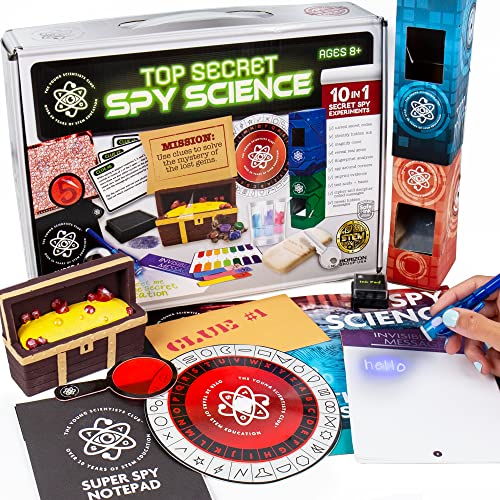
Top Secret Spy Science Kit
Best for parties · The Young Scientists Club

Top Secret Spy Science Kit

Built for the crime-solver kid and a natural fit for a detective-themed birthday. It's a crime-solver set with the spy-craft basics — codes, hidden messages, the be-your-own-secret-agent stuff — pitched right at eight-to-ten-year-olds. The Young Scientists Club makes genuine STEM kits rather than throwaway toys, so the activities have a little substance. If you're outfitting a group of kids for a party or a sleepover mystery, this is a sane, affordable way to do it.

Builds: code-breaking · invisible ink · teamwork

~$17· See it on Amazon

Detective & deduction games

Forensics is deduction with props. These games build the underlying skill — ruling suspects out one clue at a time — whether solo, cooperatively, or around the table.

Dog Crimes Logic Game
Best deduction · ThinkFun

Dog Crimes Logic Game

Forensics is really just deduction with props, and this is the cleanest way to build that muscle. A crime's been committed — a chewed shoe, a raided trash can — and the player uses clue cards to figure out which dog did it by ruling suspects out one at a time. It's a single-player brain-teaser with 40 challenges that ramp from easy to genuinely tricky, so it grows with the kid and travels well. ThinkFun's logic games are a reliable bet, and the silly dog theme keeps it from feeling like homework.

Builds: logical reasoning · process of elimination · focus

~$15· See it on Amazon
Junior Detective — Family Mystery Game
Best for the table · Buffalo Games

Junior Detective — Family Mystery Game

A cooperative mystery the whole family can crack together, with multiple case files so it doesn't become a one-and-done. Players work through clues to solve the case, which makes it a good gateway for a kid who likes the idea of detective work but isn't ready to run a solo investigation yet. The shared, around-the-table format is the appeal — it turns "solving a mystery" into a conversation, and the different cases mean a few real game nights out of one box rather than a single evening.

Builds: teamwork · inference · reading clues

~$20· See it on Amazon
Clue Mystery Board Game
Best classic · Hasbro

Clue Mystery Board Game

The original whodunit, and still one of the best ways to teach a kid how evidence narrows a field of suspects. Players move through the mansion gathering facts and crossing names off the list until only one answer remains — it's deductive reasoning dressed up as a board game, and the detective notepad makes the logic visible. It's an eight-and-up family staple for a reason: a careful kid can absolutely out-think the grown-ups, which keeps them coming back.

Builds: deduction · note-keeping · turn-taking

~$22· See it on Amazon

The investigator’s toolkit

The real tools an investigator reaches for: a magnifier to look closely, a microscope for trace evidence, and a UV pen for the things the eye misses. Affordable add-ons that level up any kit.

Magnifier & Tweezers Set
Best evidence tools · Learning Resources

Magnifier & Tweezers Set

Every investigator needs to look closely and pick things up without smudging them, and this cheap, sturdy pair does both. The magnifier is sized for kid hands and the tweezers actually grip, so collecting a "hair" or a fiber off the carpet becomes a real, satisfying task. Learning Resources builds classroom-grade gear that survives daily abuse — this isn't a flimsy party-favor magnifier. It's the under-$15 add-on that turns any room into a crime scene to comb over.

Builds: fine motor · close observation · careful handling

~$12· See it on Amazon
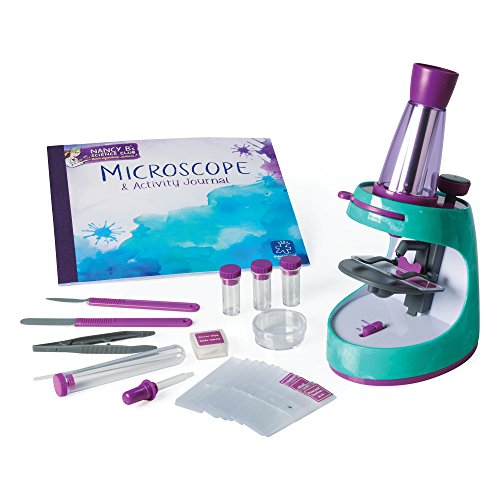
Nancy B’s Science Club Microscope
Best for trace analysis · Educational Insights

Nancy B’s Science Club Microscope

Real forensics lives under magnification — fibers, hairs, soil — and this is a genuine working microscope at a kid-friendly price. What sets the Nancy B's line apart is the included journal that prompts kids to observe, draw, and write down what they see, which is the actual scientific habit a flashier scope skips. It takes a little patience to focus, and that's the point: it rewards the careful kid. A strong bridge from "detective play" toward real science.

Builds: scientific observation · note-taking · patience

~$15· See it on Amazon
Spy Labs Inc: Invisible Ink Pen & UV Light
Best gadget · Thames & Kosmos

Spy Labs Inc: Invisible Ink Pen & UV Light

The single most reliable crowd-pleaser in the genre: write a message you can't see, then make it glow under the UV light. It's pure cause-and-effect magic for a younger investigator, and it ties neatly into the forensic theme — UV light is a real tool for spotting things the eye misses. Thames & Kosmos quality means the pen and light actually work, unlike the dollar-store versions that die in a week. A perfect small gift or add-on to a bigger kit.

Builds: hidden writing · curiosity · fine motor

~$13· See it on Amazon

For the code-breaker

Not every young sleuth wants fingerprint powder — some want secret messages and ciphers. Cryptography is a genuine branch of investigative work, and it travels light.

Ultimate Spy Vault & Code Kit
Best for code-breakers · Klutz

Ultimate Spy Vault & Code Kit

For the kid who's more interested in cracking codes than dusting prints, this Klutz maker kit is the pick. It teaches real ways to encode and decode secret messages and build a working spy vault, and Klutz's signature is the clear, well-illustrated book that makes a slightly fiddly project actually doable for an eight-to-thirteen-year-old. Cryptography is a legitimate corner of investigative science, and this turns it into a hands-on afternoon rather than an abstraction.

Builds: cryptography · problem solving · following instructions

~$24· See it on Amazon

Pair a kit with a real tool

The savviest gift here isn't a single box — it's a forensic kit plus one genuine investigator's tool. A Forensic Investigation Kit teaches the method; a real microscope or the magnifier & tweezers let a kid actually examine the fiber or hair they collected. That combination is what nudges a child from detective play toward real science — and both add-ons sit comfortably under $15.

How much to spend

You don't need to spend much to get started. Several of the best picks here are under $15 — the invisible-ink pen, the Nat Geo Spy Science kit, the magnifier & tweezers, and Dog Crimes all punch above their price. The $17–24 sweet spot (the Forensic Investigation Kit, Clue, the Klutz code kit) is where most generous birthday gifts land. The one splurge is the Master Detective Toolkit at around $39 — worth it for a kid who's truly hooked.

Frequently asked questions

What is the best forensic science kit for kids?
Our top pick is the Thames & Kosmos Spy Labs Forensic Investigation Kit — it includes a proper lab setup and walks kids through collecting and analyzing evidence like a real case, rather than just handing over props. For the most complete experience, the Spy Labs Master Detective Toolkit V2 adds fingerprints, footprints, and tire tracks with a 32-page experiment storybook. Both come from established science-toy makers.
What age are forensic science toys good for?
Most genuine forensic and detective kits are aimed at ages 8 and up, because following lab procedures and reasoning through clues takes some reading and patience. Younger kids (6–7) do well with the simpler gadget-driven options like the National Geographic Spy Science Kit or the Thames & Kosmos invisible-ink pen. The Clue board game and ThinkFun Dog Crimes are both 8+ and build the deduction skills at the heart of forensic work.
Do forensic kits actually teach real science?
The good ones do. Lifting and comparing fingerprints, examining fibers or hairs under a microscope, and documenting evidence are genuine techniques, and kits like the Thames & Kosmos and Nancy B’s microscope teach the real habit of careful observation and note-taking. The deduction games teach process-of-elimination logic. As always, the more a kit asks the child to observe, record, and reason — rather than just play-act — the more science is actually being learned.
What do you need for a detective-themed birthday party?
Affordable, kid-outfitting kits work best for groups. The Young Scientists Club Top Secret Spy Science Kit is built for spy parties, and inexpensive add-ons like the Learning Resources magnifier-and-tweezers set or the invisible-ink pen let every kid have a tool of their own. A cooperative mystery like Buffalo Games Junior Detective gives the whole group a single case to crack together.
Are these toys good for both boys and girls?
Yes — every kit, game, and tool here is for any curious kid. Forensic science, deduction, and code-breaking are universal interests, and steering a child toward or away from them based on gender just narrows what they get to explore. Pick for the child’s interest level and reading age, not the box art.

How we choose — and a word on the links

Educational Toys Planet has specialized in learning toys since 2004. We pick independently, only from established makers, then cross-check every candidate against current availability and the major independent award and expert lists. We don't accept payment for placement.

Affiliate disclosure: the product links here are Amazon Associate links. If you buy through them we may earn a small commission at no extra cost to you — that's what keeps these guides free and updated. Prices change; tap through for Amazon's current figure. Last updated June 2026.

Related guides