

Best Alphabet Learning Toys for Kids (2026)

The alphabet sticks through play, not drills. A two- or three-year-old learns letters by grabbing them off the fridge, twisting them out of an acorn, and squishing them out of foam — not by being quizzed. The trick is plenty of low-pressure exposure plus the moment that matters most: connecting each letter to the sound it makes, which is the bridge to reading.

So we kept only toys we'd actually hand a preschooler — every one from a maker with a real track record, spanning magnets, puzzles, sound toys, and games, with a genuine reason behind each choice.

🧸 Curating learning toys since 2004 Independent picks · no pay-for-placement

How kids actually learn their letters

Learning the alphabet is really three skills stacked on top of each other, and good toys hit each one. First comes letter recognition — knowing that shape is a "B" — which kids pick up through sheer repetition, so magnets, blocks, and puzzles they see every day do the heavy lifting. Then comes the letter–sound link: that "B" says /b/. This is the step that actually leads to reading, and it's where sound toys and matching puzzles earn their place, because they attach the sound to the shape without a grown-up drilling it.

The third piece is letter formation — the hand motion of making a letter — which is why tracing, foam, and even a toy drill matter: they build the fine-motor muscle memory that handwriting will need next year. You don't need one toy that does all three. You need a small, varied mix, so a child meets the alphabet from several angles: one on the fridge, one to play as a game, one that talks back, one that gets their hands working.

Letters you can stick, sort, and hold

The alphabet sticks best when it's a thing a child handles all day, not a worksheet. These put letters in little hands — on the fridge, in an acorn, squished out of foam.

52 Wooden Alphabet Magnets in a Box
Editor’s pick · Melissa & Doug

52 Wooden Alphabet Magnets in a Box

The fridge full of letters is where a huge number of kids first meet the alphabet, and this is the set we'd start with. You get both uppercase and lowercase in sturdy wood — which quietly matters, because the lowercase letters are the ones a child actually reads in books, and most cheap magnet sets give you capitals only. The chunky shapes are easy for little fingers to grab and won't disappear under the stove the way thin foam letters do. It's not a "lesson," it's a magnet board a toddler walks past forty times a day, and that low-pressure repetition is exactly how letters stick.

Builds: letter recognition · uppercase & lowercase · fine motor

~$11· See it on Amazon
Alphabet Acorns Activity Set
Best hands-on · Learning Resources

Alphabet Acorns Activity Set

Letters a child holds, twists open, and matches. Each acorn cracks apart to reveal a letter and a little picture that starts with that sound — a is for apple — so kids are building the letter-to-sound link while their fingers get a real pincer-grasp and twist workout. We like that it's self-checking and tactile rather than a screen: a preschooler can play it alone, sorting and matching, and the chunky acorns are nearly indestructible. It scales nicely too, from "find the A" at three to early word-building closer to five.

Builds: letter recognition · pincer grasp · sorting

~$24· See it on Amazon
Playfoam Shape & Learn Alphabet Set
Best sensory · Educational Insights

Playfoam Shape & Learn Alphabet Set

For the wiggly, hands-need-something kid, forming letters out of squishy foam beats tracing on a worksheet every time. Children squash the no-dry Playfoam over the letter cards and shape each one themselves, which builds the muscle memory of how a letter is actually made — the same motion writing will need later. It's genuinely calming sensory input, the foam never dries out so it lasts, and it's small enough to be a quiet table or travel activity. Fair warning: it's foam, so it's a tiny-bits-on-the-floor toy.

Builds: letter formation · sensory play · fine motor

~$13· See it on Amazon

From letter names to letter sounds

Knowing "that's a B" is step one; knowing it says /b/ is the step that leads to reading. These toys build that bridge, and most are self-guided so kids can practice solo.

Fridge Phonics Magnetic Letter Set
Best for letter sounds · LeapFrog

Fridge Phonics Magnetic Letter Set

Recognizing the letter "B" and knowing it says /b/ are two different skills, and this is the toy that bridges them. A child drops a letter into the bus and it sings the name, the sound, and a little song — so the sound gets attached to the shape without a grown-up drilling it. It's the one electronic toy we'd actively recommend in this guide, because the feedback loop is the whole point: press, hear, repeat. It does take batteries and it does sing the same songs a lot, so it earns its keep more in the car or the kitchen than on a quiet shelf.

Builds: letter sounds · phonics · cause & effect

~$30· See it on Amazon
Hot Dots Alphabet Set with Interactive Pen
Best self-guided · Educational Insights

Hot Dots Alphabet Set with Interactive Pen

The talking pen is what makes this one click. A child touches the Player pen to an answer and it responds — a cheerful "right!" or a gentle "try again" — so they get instant feedback and can work through the 72 activities entirely on their own. That independence is the appeal: it buys real solo learning time, and it covers both letter recognition and beginning sounds. The pen needs batteries and the cards are a closed system, but for a kid who likes to "quiz" themselves, it earns a lot of focused play.

Builds: letter recognition · letter sounds · independent play

~$15· See it on Amazon
ABCs & Letter Sounds Wooden Puzzle
Best for uppercase + lowercase · Educational Insights

ABCs & Letter Sounds Wooden Puzzle

This one tackles the part that trips kids up: matching the capital letter to its lowercase partner and to the sound it makes. The wooden pieces pair uppercase with lowercase and a picture cue, so a child physically connects "B" with "b" with /b/ — three representations of the same letter that books expect them to know. It's self-correcting, which means a preschooler can play independently without a grown-up confirming every move. A genuinely useful step up once the basic A-to-Z names are familiar.

Builds: uppercase & lowercase · letter sounds · matching

~$23· See it on Amazon

Puzzles, games & hands-on builds

Sequencing A-to-Z, racing to name a letter, or drilling bolts to spell one — different kids click with different formats, so here's a spread of them.

Alphabet Express Jumbo Floor Puzzle
Best under $15 · Melissa & Doug

Alphabet Express Jumbo Floor Puzzle

Ten feet of alphabet that a child builds on the living-room floor. Assembling the 27 chunky pieces in A-to-Z order teaches the sequence of the alphabet in a way a flat puzzle on a table never quite does — it's a whole-body project, and the picture along the train gives plenty to talk about. The cardboard is thick and well-made, it stores flat, and two kids can build it together. A lot of value for the price, and a nice break from anything with a screen or batteries.

Builds: letter sequence · gross motor · problem solving

~$12· See it on Amazon
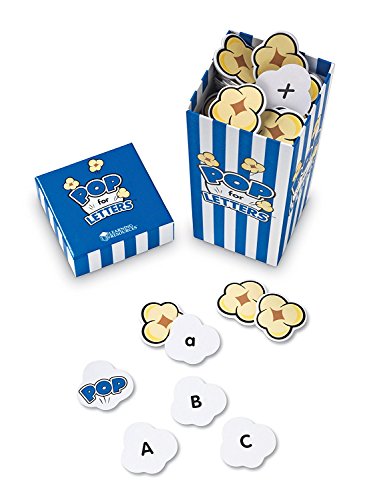
Pop for Letters Game
Best first game · Learning Resources

Pop for Letters Game

A fast, silly card game that turns letter practice into something kids beg to play again. Players pull letters from the popcorn box and read them to keep them — until someone draws a "Pop!" card and loses their whole pile, which preschoolers find hysterical. The game format does the work: kids practice naming letters quickly and take turns, and the luck of the "Pop!" means a four-year-old can genuinely beat a grown-up. It's our pick for making letter recognition feel like play rather than a drill.

Builds: letter recognition · turn-taking · quick recall

~$12· See it on Amazon
Alphabet Blocks Wooden Learning Puzzle
Best wooden classic · Hape

Alphabet Blocks Wooden Learning Puzzle

A handsome, sturdy wooden puzzle that doubles as blocks — the kind of toy that looks good left out on a shelf and survives a sibling or two. Kids match each letter tile into its spot, building letter recognition and the fine-motor precision of placing a piece just so, then stack the pieces freestyle when the puzzling is done. Hape's wood and paint quality is a real step up from bargain-bin sets, and the chunky tiles suit toddler hands. Simple, durable, no batteries — it just quietly does its job.

Builds: letter recognition · fine motor · matching

~$23· See it on Amazon
Design & Drill ABCs & 123s
Best for active kids · Educational Insights

Design & Drill ABCs & 123s

For the child who would rather build than sit, a real kid-safe power drill that teaches letters. Kids drive colorful bolts to spell out letters and numbers on the activity cards, combining genuine letter recognition with a serious fine-motor and hand-strength workout — the same grip strength handwriting will need next year. The "I'm using a real tool" thrill buys a remarkable amount of focused play. It buzzes, so it's not a silent toy, but that motor is exactly what they'll love, and it sneaks the alphabet in sideways.

Builds: letter recognition · fine motor · hand strength

~$20· See it on Amazon

How much to spend

You really don't need to spend much here — alphabet toys are one of the better-value corners of the toy aisle. Several of the best picks are under $15: the Melissa & Doug magnets, the Playfoam alphabet set, the Alphabet Express floor puzzle, and the Pop for Letters game all punch above their price. The $20–30 range (the Alphabet Acorns, Hape puzzle, ABCs & Letter Sounds puzzle, and the LeapFrog Fridge Phonics) is where most generous birthday gifts land. Honestly, the smartest buy is a cheap magnet set plus one sound toy — that covers everyday exposure and the letter-sound link for under $40 combined.

Frequently asked questions

What are the best toys for learning the alphabet?
Our top pick is the Melissa & Doug 52 Wooden Alphabet Magnets — both uppercase and lowercase, sturdy, and low-pressure on the fridge. For range, mix the ways kids meet letters: magnets for everyday exposure, a sound-based toy like LeapFrog Fridge Phonics to connect letters to their sounds, a tactile set like Alphabet Acorns or Playfoam for hands-on learning, and a game like Pop for Letters to make recall fun. Every toy here is from an established maker like Melissa & Doug, Learning Resources, Educational Insights, LeapFrog, or Hape.
What age should a child start learning the alphabet?
Most children start recognizing a few letters — usually the ones in their own name — around ages 2 to 3, and many know most of the alphabet by 4 or 5. There is a wide normal range, so do not worry if your child is ahead of or behind a friend. The toys in this guide span that window: chunky magnets and wooden puzzles suit toddlers around 2 to 3, while letter-sound toys, games, and the drill set land best for the 3 to 6 crowd who are building toward reading.
Should kids learn letter names or letter sounds first?
Both matter, and good toys weave them together. Letter names (the "ay, bee, see" of the alphabet song) give children a label and a sense of the set, while letter sounds (/a/, /b/, /k/) are what they actually need to start reading. Many kids learn names first because of the alphabet song, then attach sounds. Toys like LeapFrog Fridge Phonics and the ABCs & Letter Sounds puzzle are valuable precisely because they pair the letter shape with its sound, which is the link that leads to reading.
Are uppercase or lowercase letters more important to learn?
Children often learn uppercase first because the shapes are simpler and more distinct, but lowercase letters are what fill the books they will actually read — so both matter, and the best sets teach them side by side. We deliberately favored toys that include lowercase, like the Melissa & Doug magnets and the Educational Insights ABCs & Letter Sounds puzzle, because matching a capital to its lowercase partner is a genuine skill that trips kids up and is worth practicing directly.
Do alphabet learning toys really work, or are flashcards enough?
Hands-on toys tend to beat flashcards for young children because kids this age learn by doing — holding, sorting, and building cement a letter far better than passive drilling. The research-backed move is plenty of low-pressure exposure (magnets, puzzles, books) plus playful practice (games, sound toys) rather than rote memorization. Flashcards have a place for quick review, but a child who builds the alphabet train, squishes out an "S," and plays a letter game is doing the kind of active learning that sticks.

How we choose — and a word on the links

Educational Toys Planet has specialized in learning toys since 2004. We pick independently, only from established makers, then cross-check every candidate against current availability and the major independent award and expert lists. We don't accept payment for placement.

Affiliate disclosure: the product links here are Amazon Associate links. If you buy through them we may earn a small commission at no extra cost to you — that's what keeps these guides free and updated. Prices change; tap through for Amazon's current figure. Last updated June 2026.

Related guides