Best Social Skills Toys & Games for Kids (2026)

Social skills are learned, not born. Naming a feeling, taking a turn, reading a friend's face, asking for help, losing without melting down — none of it is automatic, and all of it gets easier with practice. The good news is that the best practice doesn't look like practice at all: it looks like a game, a puppet show, or a doctor kit on the living-room floor.

So we kept only toys we'd actually hand a child to build these skills — every one from a maker with a real track record, and many of them staples in real speech-therapy and social-emotional-learning classrooms, with a genuine reason behind each choice.

🧸 Curating learning toys since 2004 Independent picks · no pay-for-placement

What "social development" actually means

It's a big phrase for a stack of small, concrete skills. The first is emotional literacy — being able to name what you feel and recognize it in someone else, which is the seed of empathy. The second is turn-taking and cooperation: waiting, sharing, following a rule, and working toward a goal with other people. The third is conversation — starting one, listening, and responding instead of just talking past each other.

Kids build all three the same way: by doing them, over and over, in low-stakes situations where a mistake costs nothing. That's why a cooperative game beats a worksheet on "being a good friend," and why a puppet pulls more honest talk out of a shy kid than a direct question ever will. The toys below each take one of these skills and turn it into play — pick by what your child is working on.

Naming and reading feelings

Social skills start on the inside: a child who can name what they feel — and spot it on someone else's face — has the foundation for everything else. These build emotional vocabulary and empathy without a single lecture.

My Feelings Bean Bags
Best for naming emotions · Educational Insights

My Feelings Bean Bags

Putting a name to a feeling is the first social skill, and it's weirdly hard for a three- or four-year-old who only has "happy" and "mad" to work with. Each soft bean bag shows a face — proud, nervous, silly, frustrated — and the prompts get a child to spot it, mimic it, and talk about a time they felt that way. We like that it's tactile and low-pressure: there's no winning or losing, just a calm five minutes that quietly grows the vocabulary kids need to say "I'm frustrated" instead of melting down. It's a classroom calm-corner staple for a reason.

Builds: emotion vocabulary · self-regulation · turn-taking

~$20· See it on Amazon
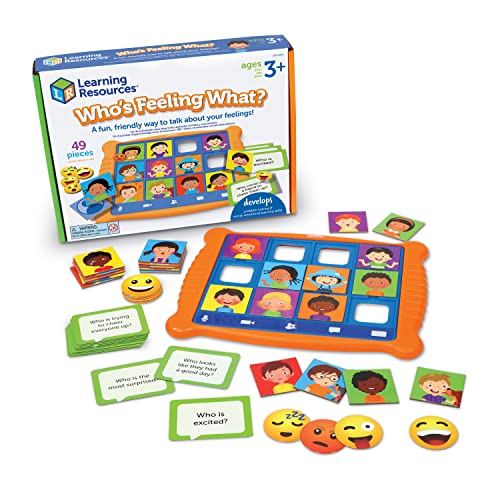
Who's Feeling What?
Best feelings game · Learning Resources

Who's Feeling What?

A genuinely fun matching game that's secretly an empathy workout. Kids read a short scenario card — your ice cream fell, you won a race, you lost your toy — and match it to the face showing how that child probably feels. The payoff is the conversation it kicks off: "When did you feel that way?" lands far better mid-game than as a lecture. At 49 pieces it's a real game, not a flimsy flashcard deck, and it's a favorite with speech and occupational therapists for exactly that reason.

Builds: reading emotions · empathy · listening

~$15· See it on Amazon
I Heard Your Feelings Conversation Cards
Best for empathy · eeBoo

I Heard Your Feelings Conversation Cards

eeBoo's illustrated cards show small, real social moments — a kid left out of a game, a sibling who broke something — and ask a child to read the scene and talk through what's happening and how each person feels. It's the difference between knowing the word "sad" and recognizing sadness on someone else's face, which is the harder, more useful skill. The art is lovely and unhurried, and there are no right answers to memorize, just openings for a real back-and-forth. Great one-on-one at bedtime or with a small group.

Builds: emotional literacy · perspective-taking · conversation

~$16· See it on Amazon

Playing together, winning together

Cooperative games are the shortcut to teamwork, because everyone wins or loses as one. No gloating, no meltdowns — just kids learning to take turns and pull for each other.

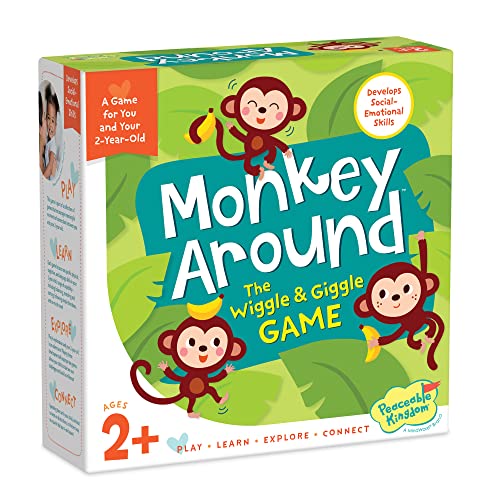
Monkey Around
Best first cooperative game · Peaceable Kingdom

Monkey Around

A two-year-old's very first game, and a smart one: everyone plays together toward a shared goal, so there's no losing and no tears. Players take turns drawing a card and doing the silly action — hug a grown-up, hop like a frog, spin around — which builds the bedrock social skills (waiting your turn, following a simple rule, doing it together) without any of the competitive sting toddlers aren't ready for. It's active and quick, which suits a two- or three-year-old's attention span perfectly. The ideal on-ramp before competitive games arrive at four or five.

Builds: turn-taking · cooperation · following directions

~$18· See it on Amazon
My First Castle Panic
Best for teamwork · Fireside Games

My First Castle Panic

Cooperative games are the cheat code for teaching teamwork, because the players win or lose together — so kids root for each other instead of gloating. In this preschool version of the cult-favorite Castle Panic, the whole table works to keep friendly monsters from reaching the castle, talking through who should play what. It's the rare board game that rewards a four-year-old for helping a sibling rather than beating them, and grown-ups don't have to fake enthusiasm to play along. Pricier than a flashcard deck, but it earns real family-table time for years.

Builds: cooperation · strategy · taking turns

~$40· See it on Amazon

Starting conversations

Knowing how to begin a conversation, take turns talking, and actually listen is a skill you can practice. These turn that practice into a game.

Campfire Chatmallows Story Cubes
Best conversation starter · Educational Insights

Campfire Chatmallows Story Cubes

Half the battle in social skills is just learning how to start a conversation and take turns talking — and a plush "campfire" with toastable marshmallow cubes makes that feel like play instead of practice. Kids roll a cube, read the prompt, and answer or build a group story, with everyone getting a turn around the "fire." It's a low-stakes way to get a shy kid talking and a chatty kid listening, and it works for siblings, playdates, or a dinner table that's gone quiet. The campfire gimmick is genuinely charming rather than annoying.

Builds: conversation · storytelling · listening

~$19· See it on Amazon
Good Manners Conversation Cards
Best for manners · eeBoo

Good Manners Conversation Cards

Manners stick better when a child reasons through them than when they're nagged into "say please." Each card poses a small everyday situation — someone's talking over you, a friend shares their snack, you bump into someone — and invites a conversation about what to do and say. It's not preachy; it treats kindness as a set of choices a child can think through. We reach for these at the dinner table and in the car, a card or two at a time. The illustrations are warm and the situations are ones kids actually run into.

Builds: social awareness · polite behavior · discussion

~$14· See it on Amazon
Let's Talk! Conversation Cubes
Best for ages 5+ · Learning Resources

Let's Talk! Conversation Cubes

Six foam cubes, 36 open-ended prompts — "what makes you laugh," "describe a good friend," "what would you do if" — and a remarkably reliable way to get a five- or six-year-old talking past one-word answers. Rolling a cube turns "tell me about your day" into a game, which is the whole trick. Teachers use these as morning-meeting and back-to-school icebreakers, and they work just as well at home for a kid who needs a little scaffolding to open up. Soft, quiet, and impossible to get wrong.

Builds: conversation · self-expression · listening

~$14· See it on Amazon

Pretend play and role-rehearsal

Pretend play is where kids rehearse real social roles — caring for someone, asking for help, being part of a group. For shy kids especially, a puppet or a prop opens a door talking face-to-face won't.

Pretend & Play Doctor Set
Best for role-play · Learning Resources

Pretend & Play Doctor Set

A doctor kit is quietly one of the best empathy toys there is. "Let me check your ears" and "this won't hurt, I promise" are the scripts of caring for someone else, and rehearsing the gentle, reassuring role is how a lot of kids practice kindness — and defuse their own fear of check-ups. This set's tools are sturdy and realistically shaped without being fiddly, and it pulls in siblings, parents, and stuffed-animal patients alike. Pretend play like this is where social rehearsal genuinely lives at three and four.

Builds: empathy · caring play · vocabulary

~$27· See it on Amazon
Jolly Helpers Hand Puppets
Best for shy kids · Melissa & Doug

Jolly Helpers Hand Puppets

Puppets are a side door for kids who freeze up talking face-to-face — a shy child will happily say through a puppet what they'd never say directly, which makes these a favorite of counselors and speech therapists. This set of community helpers (doctor, firefighter, police officer, construction worker) invites little stories about helping and asking for help, and two kids working puppets together have to negotiate a plot in real time. Well-made and soft, with the Melissa & Doug durability that survives a toy bin. A genuinely useful tool, not just a cute one.

Builds: social confidence · imaginative play · language

~$25· See it on Amazon
Sloth in a Hurry Action Game
Best group game · eeBoo

Sloth in a Hurry Action Game

A fast, funny improv game where players act out being a sloth doing everyday things — slowly — and the giggling does the social work. To play, kids have to watch each other, take turns, and exercise a surprising amount of self-control (it's hard to move that slowly on purpose). It gets a group of mixed ages playing together with no reading required and no one left out, which is exactly what you want for a playdate or a family night. Quick rounds keep antsy kids in the game.

Builds: cooperation · self-control · listening

~$14· See it on Amazon

How much to spend

You don't need to spend much here — several of the most useful picks are under $16. The Who's Feeling What? game, Good Manners cards, Let's Talk! Cubes, and Sloth in a Hurry all punch well above their price and slot easily into a dinner table or a car ride. The $18–27 range (My Feelings Bean Bags, Campfire Chatmallows, the doctor set, hand puppets) is where most generous gifts land. The one splurge worth it is My First Castle Panic — a real family-table game that teaches teamwork and lasts for years.

Frequently asked questions

What toys help a child develop social skills?
The most useful fall into a few buckets: emotion toys that teach kids to name and read feelings (My Feelings Bean Bags, the eeBoo I Heard Your Feelings cards), cooperative games where everyone wins or loses together (Peaceable Kingdom Monkey Around, My First Castle Panic), conversation games that build turn-taking and listening (Campfire Chatmallows, Let’s Talk! Cubes), and pretend-play props like a doctor set or hand puppets that let kids rehearse caring and asking for help. Mixing one or two types covers the most ground.
What age should kids start learning social skills through play?
Earlier than most people think. By two, a toddler can play a simple cooperative game like Monkey Around and start practicing turn-taking. Ages three to five is the real sweet spot for emotion-naming toys and pretend play, because that’s when kids are learning that other people have feelings different from their own. By five or six, conversation games and cooperative strategy games (like My First Castle Panic) build the listening and teamwork that school demands. There’s no toy that does it overnight, but consistent, low-pressure play adds up fast.
Are cooperative board games really better for social skills than regular games?
For young kids, often yes. In a cooperative game everyone works toward the same goal and wins or loses as a team, so a four-year-old roots for a sibling instead of gloating over them, and a loss doesn’t end in tears. That structure makes them a gentler on-ramp to game-playing and a better fit for mixed ages. Competitive games absolutely have their place once kids can handle losing gracefully — but starting cooperative builds the teamwork habit first.
How do I help a shy child build social confidence?
Lower the stakes and give them a buffer. Puppets work remarkably well — a shy child will happily speak through a puppet what they’d never say directly, which is why counselors use them. Conversation-cube games help too, because rolling a cube and answering a prompt feels like a game rather than being put on the spot. Cooperative games let a quieter kid contribute without being the center of attention. Avoid forcing eye contact or performance; let the play do the work, and follow the child’s pace.
Do these toys work for kids on the autism spectrum or in speech therapy?
Many of them are popular exactly there — several picks in this guide (the feelings games, emotion bean bags, conversation cards, and puppets) are staples in speech-language and occupational therapy and in social-emotional learning classrooms, because they make abstract skills concrete and break them into small, repeatable steps. That said, every child is different, and these are general play tools, not a treatment plan. A child’s therapist or teacher can point you to the specific ones that fit their goals.

How we choose — and a word on the links

Educational Toys Planet has specialized in learning toys since 2004. We pick independently, only from established makers, then cross-check every candidate against current availability and the major independent award and expert lists. We don't accept payment for placement.

Affiliate disclosure: the product links here are Amazon Associate links. If you buy through them we may earn a small commission at no extra cost to you — that's what keeps these guides free and updated. Prices change; tap through for Amazon's current figure. Last updated June 2026.

Related guides