Best Toys to Build a Child’s Vocabulary (2026)

Vocabulary isn’t taught — it’s grown. A child picks up words by hearing them, then reaching for them in real conversation, then tying them to print as reading begins. The best “vocabulary toys” aren’t flashcards that quiz a child; they’re the ones that get a child talking, naming, and building — doing the language work themselves.

So we kept only tools we’d actually use with a child — every one from a maker with a real track record, the kind speech therapists and teachers reach for, with a genuine reason behind each pick.

🧸 Curating learning toys since 2004 Independent picks · no pay-for-placement

How vocabulary actually grows

It helps to picture the path a word takes. First a child hears it — which is why reading aloud and simply talking through your day matters more than any toy. Then they need to use it: a word a child can point to but never says hasn’t really landed. That’s why conversation cubes, storytelling sets, and prompt games punch so far above flashcards — they force a child to retrieve a word and put it in a sentence, which is the moment it sticks.

As a child nears reading, a second track opens up: tying spoken words to print. Rhyming and word-family games teach that words are built from sounds; word-builders and sight-word games connect those sounds to letters. The picks below are sorted along exactly that arc — from getting a child talking, to naming and building words, to the patterns that make reading click. Match the tool to where your child is, not to a grade level on a box.

Get them talking

The biggest vocabulary gains don't come from drills — they come from real back-and-forth conversation, where a child has to reach for new words and string them into sentences. These three pull longer, richer talk out of a kid than any quiz could.

Let’s Talk! Cubes
Editor’s pick · Learning Resources

Let’s Talk! Cubes

The single best vocabulary tool here, and it doesn't look like one. You roll six foam cubes, land on a prompt like "Tell me about a time you felt proud," and the child has to answer in real sentences — which is exactly how vocabulary actually grows: in back-and-forth talk, not flashcards. Speech therapists keep these on their desks for a reason. The magic is that it pulls longer, more specific answers out of a kid than "How was your day?" ever will, and it turns a car ride or dinner into low-key language practice nobody resents.

Builds: expressive language · conversation · sentence length

~$14· See it on Amazon
Campfire Chatmallows
Best conversation starter · Educational Insights

Campfire Chatmallows

An adorable little campfire that "toasts" marshmallow story-and-question prompts — and like the Let's Talk Cubes, the real work is the talking it pulls out of a kid. Prompts range from "finish this story…" to "what would you do if…," so it flexes between pure conversation and imaginative storytelling. It's our pick for the slightly younger child (the marshmallow gimmick is irresistible at four or five), and it makes a genuinely sweet shared-table activity that builds vocabulary without anyone calling it practice.

Builds: conversation · expressive language · social skills

~$19· See it on Amazon
Storytelling Dominoes
Best for narrative · Educational Insights

Storytelling Dominoes

Vocabulary isn't just naming things — it's stringing them into a story, and that's the muscle this set works. Kids lay down picture dominoes and have to connect them with a sentence ("…and THEN the dragon found a key…"), which pushes them to use connecting words and describe what's happening. It's open-ended, so the same tiles make a brand-new tale every time, and it's a lovely shared activity that quietly stretches a child's sentence length and their stock of "story words."

Builds: narrative language · sequencing · imagination

~$16· See it on Amazon

Name it, build it, spell it

The hands-on core: naming everyday things, then snapping sounds and letters into actual words. Concrete and self-correcting, so kids can work at their own pace and feel the wins.

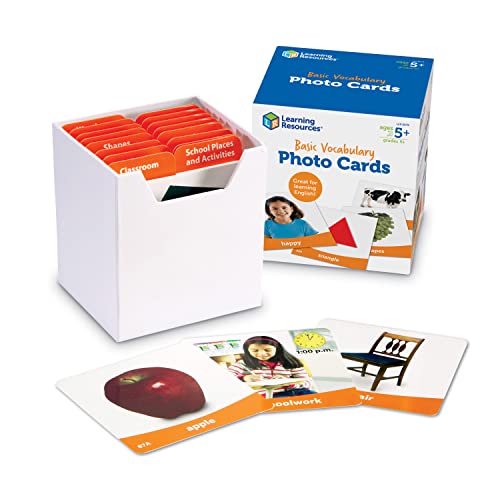
Basic Vocabulary Photo Cards
Best for word recall · Learning Resources

Basic Vocabulary Photo Cards

Real photographs, not cartoons — which matters more than you'd think for a child building a first vocabulary, because a photo of an actual apple maps onto the apple in their lunchbox. 156 everyday nouns across categories (food, clothing, animals, household), so it's the workhorse set for naming games, "find me the…," and sorting by category. It's a staple in speech-therapy and ESL kits, and it's the one to reach for if a child is slow to name things or you want to widen the words they already half-know.

Builds: naming · word recall · categories

~$35· See it on Amazon
See & Spell Wooden Learning Toy
Best word builder · Melissa & Doug

See & Spell Wooden Learning Toy

The wooden classic that quietly teaches that words are built from sounds. Eight double-sided boards show a picture with the letters missing; the child hunts down the chunky wooden letters and drops them into place. It's self-correcting — the letters only fit their slots — so a four- or five-year-old can work independently and feel the win. We like it for the kid who's ready to move from naming pictures to actually building the words, and the wood holds up where cardboard versions get chewed and bent.

Builds: spelling · letter sounds · first words

~$15· See it on Amazon
Beginning Word Builder
Best for early readers · hand2mind

Beginning Word Builder

Built around the science of reading, which is the current gold standard for how kids actually crack the code. The child slides letter tiles to build simple consonant-vowel-consonant words — cat, pin, sun — and physically swaps one letter to see "cat" become "cot." That swap is the whole point: it makes the connection between sounds and letters concrete instead of abstract. It's a focused, no-frills tool for the kindergarten-ish window when a child is sounding words out, and it pairs naturally with the See & Spell boards above.

Builds: phonics · CVC words · blending

~$14· See it on Amazon

Words that play by the rules

Rhyming families, sight words, and sentence order — the patterns that turn a pile of words into reading. Wrapped in fast games and fridge magnets so the repetition never feels like repetition.

POP for Word Families Game
Best for rhyming · Learning Resources

POP for Word Families Game

A genuinely fun card game that builds the rhyming-and-word-family skill reading depends on. Kids draw cards and read word-family words (-at, -ig, -op); draw a "POP" card and you lose your hand, which is silly enough to keep a five-year-old hooked through far more reps than a worksheet would. Hearing that "cat, hat, mat" share a chunk is a real cognitive leap, and a game is the easiest place to practice it. Cards are sturdy and it plays fast — good for two kids or a parent and one.

Builds: rhyming · word families · phonemic awareness

~$12· See it on Amazon
Pop for Sight Words Game
Best for sight words · Learning Resources

Pop for Sight Words Game

Sight words — the, was, said, they — don't sound out, so kids just have to know them on sight, and that takes repetition that's deadly dull on flashcards. This game wraps 96 of the most common words into the same addictive POP mechanic: read your word, keep the card, draw a POP and lose them all. The reading is fast and low-pressure, and the luck of the draw means a struggling reader can still win, which keeps them coming back for the practice they actually need.

Builds: sight words · reading fluency · turn-taking

~$12· See it on Amazon
Magnetic Sight Words & Sentence Builders
Best for sentences · Educational Insights

Magnetic Sight Words & Sentence Builders

Over 240 word and punctuation magnets that turn the fridge into a sentence lab. Once a child knows a handful of words, the next leap is arranging them — and physically sliding "the / big / dog / ran" into order teaches word order and grammar in a way a workbook can't. It's open-ended and always available (it just lives on the fridge), so kids build silly sentences on the way to grab a snack. A quiet, low-cost staple that grows with a reader for years.

Builds: sentence building · grammar · sight words

~$15· See it on Amazon

For the youngest talkers

Before sentences arrive, vocabulary is built one named word at a time. A first-words pick for toddlers and young preschoolers.

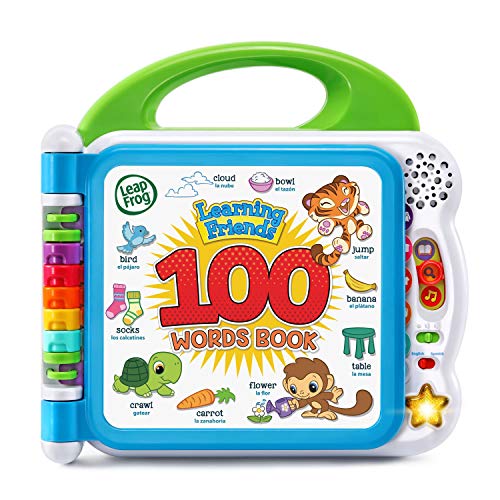
Learning Friends 100 Words Book
Best first-words gift · LeapFrog

Learning Friends 100 Words Book

The right pick for the youngest end — a sturdy interactive book that names 100 first words across categories, with a button that also plays each word in Spanish. For a toddler or young preschooler, the press-hear-repeat loop is exactly how early vocabulary gets built, and the bilingual option is a real bonus for dual-language homes. It's the most "toy-like" entry here (it has batteries and buttons), so think of it as the gateway for a not-yet-talking child, with the talk-based picks above taking over once real sentences arrive.

Builds: first words · vocabulary · bilingual

~$22· See it on Amazon

How much to spend

You don’t need to spend much — the best vocabulary tool here, the Let’s Talk! Cubes, is about $14, and several others sit under $16: POP for Word Families, Pop for Sight Words, See & Spell, Beginning Word Builder, and the Magnetic Sight Words set all do real work for pocket money. The Basic Vocabulary Photo Cards are the priciest pick at around $35, and worth it only if you specifically want a deep, real-photo naming set — for a gift, the talk-based picks give you more language per dollar.

The free part that matters most

No toy beats a grown-up who talks with a child rather than at them. Every pick here is really a conversation starter — a reason to sit down, take turns, and stretch a sentence a little longer. Read aloud daily, name things as you go, ask “why” and “what happened next,” and let the child do most of the talking. The toys earn their keep by making that easy and fun on the days you’re out of questions.

Frequently asked questions

What is the best toy to build a child’s vocabulary?
For most kids, a conversation-based tool beats flashcards — our top pick is Learning Resources Let’s Talk! Cubes, because vocabulary grows fastest in real back-and-forth talk where a child has to use words in full sentences. Pair it with a picture-based set like the Basic Vocabulary Photo Cards for naming, and a word-building toy like Melissa & Doug See & Spell once they’re ready to move from saying words to building them.
How do toys actually help with vocabulary?
The best ones get a child producing language, not just hearing it. Conversation cubes and storytelling sets make kids speak in sentences and use describing and connecting words; photo cards and first-word books expand the stock of nouns they can name; and word-building, rhyming, and sight-word games tie spoken words to print so reading can take off. The common thread: the child does the talking and the building. The more a toy performs on its own, the less vocabulary work the child is doing.
What age are these vocabulary toys for?
This guide spans toddler through early elementary. For a toddler or young preschooler (roughly 18 months–3), start with the LeapFrog Learning Friends 100 Words book and the photo cards. Around 4–5, conversation and storytelling picks (Let’s Talk! Cubes, Campfire Chatmallows, Storytelling Dominoes) and first word-building (See & Spell) land best. From kindergarten up (5–7), the phonics, rhyming, sight-word, and sentence-building tools do the heavy lifting as reading begins.
Are conversation and storytelling games really better than flashcards?
For building usable vocabulary, usually yes. Flashcards are fine for drilling a fixed set of sight words, but a word a child only recognizes on a card often doesn’t make it into their speech. Conversation cubes, storytelling dominoes, and prompt games force the child to retrieve a word and use it in a sentence — which is how it sticks and transfers. We included a couple of fast card games here too, but they win precisely because they wrap the repetition in play.
My child is a little behind on talking — where should I start?
Lead with real photographs and lots of naming: the Basic Vocabulary Photo Cards are a speech-therapy staple for exactly this, because real images map cleanly onto real objects. Add the Let’s Talk! Cubes or Campfire Chatmallows to gently pull out longer answers in everyday moments. Keep sessions short and playful, follow the child’s interests, and narrate your own day out loud — the toy is a prompt, but your back-and-forth is what does the work. If you have real concerns, a speech-language pathologist is the right call.

How we choose — and a word on the links

Educational Toys Planet has specialized in learning toys since 2004. We pick independently, only from established makers, then cross-check every candidate against current availability and the major independent award and expert lists. We don't accept payment for placement.

Affiliate disclosure: the product links here are Amazon Associate links. If you buy through them we may earn a small commission at no extra cost to you — that's what keeps these guides free and updated. Prices change; tap through for Amazon's current figure. Last updated June 2026.

Related guides