

Best Science Toys & Kits for 10-Year-Olds (2026)

Ten is when science gets real. A ten-year-old can finally read a procedure, measure carefully, and reason through cause and effect — so the genuine kits that frustrate younger kids (chemistry sets, electronics, a real microscope) suddenly land. It's a brilliant age to shop for, and an easy one to get wrong: half the "STEM" toys here are a single gimmick in a flashy box that a curious kid sees through in a day.

So we kept only kits where the child does the science — every one from a maker with a real track record, with an honest reason (and honest caveats) behind each pick.

🧸 Curating learning toys since 2004 Independent picks · no pay-for-placement

What makes a good science gift at ten

Shopping well for this age comes down to one question: does the kit make the child do the experiment, or does it just perform for them? Ten-year-olds have the reading, the patience, and the fine motor control to run a real procedure — to measure a reagent, wire a circuit, focus a lens, brush dirt off a fossil. That's a genuine leap from the "press the button and watch it light up" toys of a few years earlier, and it's why a real chemistry set or a Snap Circuits kit pays off now when it would have frustrated a seven-year-old.

The best gift also matches the kid. A future engineer wants circuits and tumblers and things that build; a kid who loves animals wants a microscope and an anatomy model; a treasure-hunter wants geodes and fossil digs; a class clown wants the gross-out kit — and every one of those is doing real science underneath. Two practical notes worth knowing up front: a few kits have a hot-water or mixing step an adult should handle, and the dig-and-crack kits are gloriously messy, so plan for a tray or the back porch.

Real lab science

By ten, kids can read a procedure, measure carefully, and grasp cause and effect — so a genuine chemistry, electronics, or microscope kit finally lands. These are the toys that make "how does this work" click.

Amazing Chemistry Set
Editor’s pick · National Geographic

Amazing Chemistry Set

If you buy one science gift for a ten-year-old, make it a real chemistry set — and this is the one we'd start with. It runs more than a hundred genuine experiments: fizzing reactions, color changes, a small erupting volcano, and crystals you grow yourself. At nine and ten, kids are finally old enough to read a procedure, measure carefully, and understand cause and effect, which is exactly what bench chemistry rewards. It comes with goggles and a clear manual, and the experiments use safe household-grade chemistry — but the satisfying part is that the reactions are real, not a toy pantomime of science.

Builds: chemical reactions · measurement · following procedure

~$40· See it on Amazon
Snap Circuits Jr. SC-100 Electronics Kit
Best electronics · Snap Circuits

Snap Circuits Jr. SC-100 Electronics Kit

The gold standard for a first taste of real electronics, and the rare STEM toy that genuinely teaches the thing it claims to. Components — a switch, a motor, a speaker, an LED, a photoresistor — snap onto a plastic grid like LEGO, so a ten-year-old builds a working radio or a light-activated alarm with zero soldering and zero frustration. The 100-plus projects in the manual climb in difficulty, so it grows with the kid, and the snap format means a wiring mistake is a two-second fix rather than a dead end. It's the kit that makes "how does this actually work" click.

Builds: circuits & electricity · reading diagrams · logical sequencing

~$30· See it on Amazon
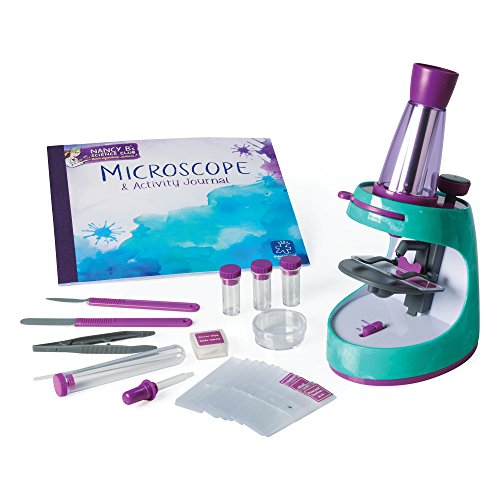
Nancy B’s Science Club Microscope
Best microscope · Educational Insights

Nancy B’s Science Club Microscope

A real working microscope at a price that won't make you wince if it gets left out in the rain. It magnifies 30x to 400x with two LED lights, and — the part that sets it apart — it ships with a journal that prompts kids to draw and write up what they see, which is how scientists actually work. A pond-water drop, an onion skin, a strand of their own hair: a ten-year-old curious about how living things are built will lose an afternoon to this. The optics are entry-level, not lab-grade, but they're more than enough to spark the habit of looking closely.

Builds: observation · note-taking · biology basics

~$15· See it on Amazon

Look up & dig down

The wonder end of science: a real telescope for the night sky, and the earth-science kits whose payoff is a glittering crystal or a real fossil no one has ever seen.

GeoSafari Starview Telescope
Best for astronomy · Educational Insights

GeoSafari Starview Telescope

A genuine beginner refractor telescope, not a toy — it'll actually show a ten-year-old the craters on the Moon and the moons of Jupiter as points of light, which is the moment a lot of kids fall for space for good. It comes on a sturdy tripod with swappable eyepieces, so there's a real skill to learn in finding and focusing on an object. Set expectations: like every entry telescope, the Moon is the showstopper and planets are small bright dots — but seeing Saturn with your own eye for the first time hits differently than any photo. Best paired with a clear night and a little grown-up patience the first few sessions.

Builds: astronomy · patience · spatial thinking

~$38· See it on Amazon
Break Open 5 Jumbo Geodes Kit
Best geology · National Geographic

Break Open 5 Jumbo Geodes Kit

The most reliable wow in science gifting: you crack open a plain, lumpy rock and find a cavity of glittering quartz crystals that no one has ever seen before. This set has five extra-large geodes, goggles, and display stands, and a ten-year-old gets the full earth-science story along with the payoff — how these formed over millions of years, why the crystals grow inward. It's hands-on and a little suspenseful (you don't know what's inside until you break it), and the crystals are keepers that end up on a shelf. A genuinely great gift even for a kid who claims not to like science.

Builds: earth science · careful technique · observation

~$40· See it on Amazon
Mega Fossil & Gemstone Dig Kit
Best for diggers · National Geographic

Mega Fossil & Gemstone Dig Kit

Twenty real fossils and gemstones buried in a brick of dig material, excavated with the included tools — part archaeology dig, part treasure hunt. It's the toy for the kid who loves dinosaurs and rocks, and the slow chip-chip-brush of excavation builds a surprising amount of focus and fine control. Every find is a real specimen — a shark tooth, a chunk of fossilized coral, a gemstone — with a learning guide explaining what it is. Messy (it's literally digging), so park it outside or over a tray, and budget a couple of sessions to get everything out.

Builds: paleontology · careful excavation · patience

~$30· See it on Amazon

Hands-on experiments

Self-directed kits a ten-year-old can mostly run solo — patient crystal-growing, hands-on magnetism, and the gleefully gross stuff that hooks the reluctant scientist.

7-Crystal Growing Science Kit
Best slow experiment · 4M

7-Crystal Growing Science Kit

Crystal-growing is the experiment that teaches patience as much as chemistry — you mix the solution, then watch real crystals form over days, which is a genuinely good lesson for a ten-year-old in a world of instant everything. This kit grows seven different crystals and includes display cases to keep them, so there's a payoff to the waiting. It does need adult help with the hot-water step at the start, and results vary with how carefully you follow the directions — which is itself part of the science. A quiet, rewarding project for a kid who likes to make something real.

Builds: chemistry · patience · observation over time

~$19· See it on Amazon
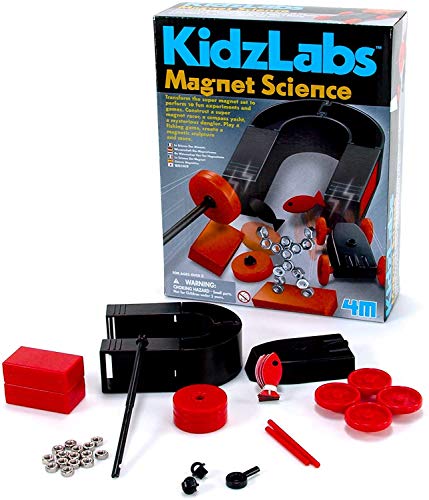
Magnet Science Kit
Best under $15 · 4M

Magnet Science Kit

Ten magnetism experiments in one inexpensive box, and a sneaky-good intro to physics. Kids build a magnet-powered racer, make a magnet appear to float, rig a magnetic fishing game, and feel invisible forces push and pull — the kind of hands-on play that makes an abstract idea ("fields," "poles") concrete. It punches far above its price, works as a standalone gift or a stocking-stuffer alongside a bigger kit, and it's the rare science toy a ten-year-old can mostly run without a grown-up hovering.

Builds: physics · magnetism · experiment design

~$14· See it on Amazon
Gross Science Kit
Best gross-out · National Geographic

Gross Science Kit

Lean all the way into the ten-year-old sense of humor: 45 experiments built around fake snot, oozing slime, a squishy dissectible brain, erupting reactions, and a "fart machine." It sounds like a gag gift, but the gross hook is doing real work — every yucky experiment teaches an actual bit of biology or chemistry, and kids who'd roll their eyes at a "science kit" devour this one. It's the pick for the reluctant scientist, the class clown, or any kid whose favorite word is "ew." Messy in the best way; do it on a wipeable surface.

Builds: biology & chemistry · experiment fun · curiosity

~$21· See it on Amazon

How the body — and the rock — works

The two big projects: a build-it-yourself anatomy model for the kid curious about their own body, and a weeks-long rock tumbler for the one who loves making something real.

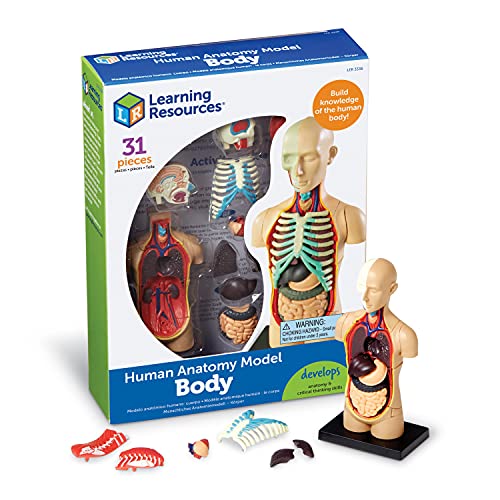
Human Body Anatomy Model
Best for biology · Learning Resources

Human Body Anatomy Model

A 31-piece model of the human body kids assemble themselves — removable organs that fit into a torso, so a ten-year-old learns where the lungs sit, how the intestines pack in, what the heart connects to, by actually handling each part. It's the toy for the kid fascinated by how their own body works, and it doubles as genuine homework help when biology hits in school. Sturdy plastic, an included guide, and the kind of slightly-gross factor (real organ shapes) that ten-year-olds find irresistible rather than off-putting.

Builds: anatomy · how the body works · assembly

~$23· See it on Amazon
Hobby Rock Tumbler Kit
The splurge · National Geographic

Hobby Rock Tumbler Kit

The big-ticket gift that turns into a weeks-long project: load rough stones and grit into the noise-reduced barrel, run it, change the grit through four stages over several weeks, and raw rubble comes out as glassy polished gemstones. A ten-year-old learns real geology and a real lesson in delayed payoff — tumbling can't be rushed. Two honest caveats: it runs for days at a time (the quieter barrel helps, but it's not silent), and the finished stones are genuinely beautiful, so kids get hooked and want more rough to tumble. Worth it for a kid who loves rocks or making things.

Builds: geology · long-term patience · process & routine

~$75· See it on Amazon

How much to spend

You really don't need to spend a lot. Several of the best kits here are under $25 — the Magnet Science Kit, Nancy B's Microscope, the 7-crystal growing kit, and the Gross Science Kit all over-deliver. The $30–40 sweet spot (chemistry set, telescope, geodes, fossil dig) is where most generous birthday gifts land. The one splurge worth it is the rock tumbler at around $75 — it's a weeks-long project, not a one-afternoon toy, so the cost-per-hour is tiny.

Frequently asked questions

What are the best science kits for a 10-year-old?
For a single gift, a real chemistry set like the National Geographic Amazing Chemistry Set or an electronics kit like Snap Circuits Jr. gives the most genuine science per dollar — both run 100-plus experiments and grow with the child. For range, pair a "lab" kit (chemistry or microscope) with a "wonder" kit (a telescope, a geode-cracking set, or a rock tumbler). Every pick in this guide comes from an established science-toy maker like National Geographic, Snap Circuits, 4M, Educational Insights, or Learning Resources.
Are these science kits actually educational, or just toys?
These are real. The chemistry and gross-science kits run genuine reactions; Snap Circuits builds working radios and alarms a child wires themselves; the microscope and telescope are entry-level but real optical instruments; the anatomy model and geode kits teach actual biology and earth science. The test we used: does the kit make the child do the science, or does it just perform a trick? We kept the ones where the kid is the one experimenting — that is where the learning lives.
How much should I spend on a science gift for a 10-year-old?
You do not need to spend much. Several of the best kits here are under $25 — the 4M Magnet Science Kit, Nancy B’s Microscope, the 4M crystal kit, and the Gross Science Kit all punch above their price. A $30–40 chemistry set, telescope, or geode kit makes a generous birthday gift. The one true splurge is the rock tumbler at around $75 — worth it for a kid who loves rocks, since it becomes a weeks-long project, not a one-afternoon toy.
My kid says they don’t like science. What should I get?
Lead with the hook, not the label. The Gross Science Kit (fake snot, slime, a dissectible brain) and the Break Open Geodes (crack a plain rock, find hidden crystals) both win over kids who roll their eyes at a "science kit," because the fun comes first and the learning rides along. A rock tumbler works the same way — it is really a make-something project. Pick for what the child already finds cool, whether that is gross-out humor, treasure-hunting, or building things.
Which of these need adult supervision?
Most are largely kid-run, but a few have a step worth helping with. The chemistry sets and the crystal-growing kits involve a hot-water or mixing step at the start that an adult should handle. The geode-breaking and fossil-digging kits are messy and best done outside or over a tray, with goggles on. The telescope usually needs a grown-up for the first couple of sessions to help find and focus on an object. The microscope, magnet kit, electronics, and anatomy model a ten-year-old can mostly manage independently.

How we choose — and a word on the links

Educational Toys Planet has specialized in learning toys since 2004. We pick independently, only from established makers, then cross-check every candidate against current availability and the major independent award and expert lists. We don't accept payment for placement.

Affiliate disclosure: the product links here are Amazon Associate links. If you buy through them we may earn a small commission at no extra cost to you — that's what keeps these guides free and updated. Prices change; tap through for Amazon's current figure. Last updated June 2026.

Related guides